

More than 20 sunken military ships, a sea mine from World War II, and a mammoth jaw — all these were revealed by the Danube in the summer of 2026, when the water level fell to record lows for the entire observation period. In Bratislava, the river also dropped to a historic minimum, and hydrologists warn: there will be no quick improvement in the situation.
The reason is simple: extreme heat and a long period without significant rainfall throughout the Danube basin. The river, which carries water from Germany to the Black Sea, has become shallow simultaneously in Slovakia, Hungary, Serbia, and Bulgaria.
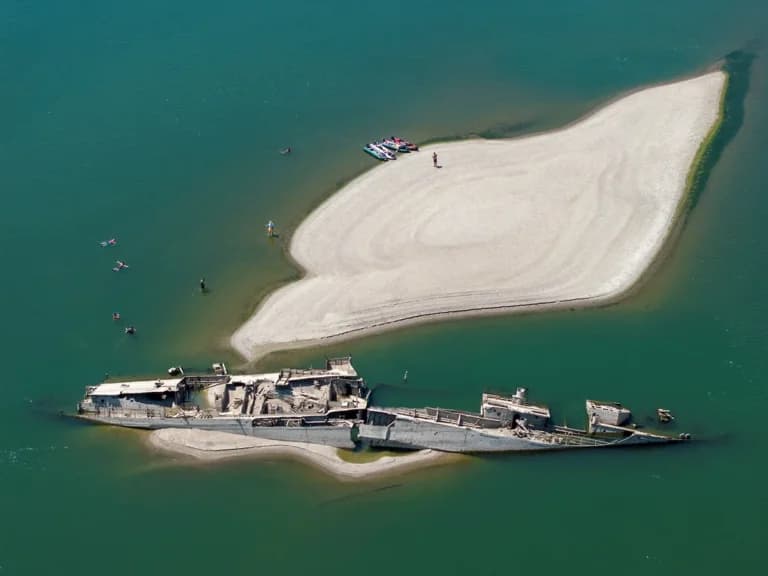
What was found on the exposed bottom
This drought is also connected to an archaeological aspect. The water receded — and uncovered items that had been lying on the bottom for decades.
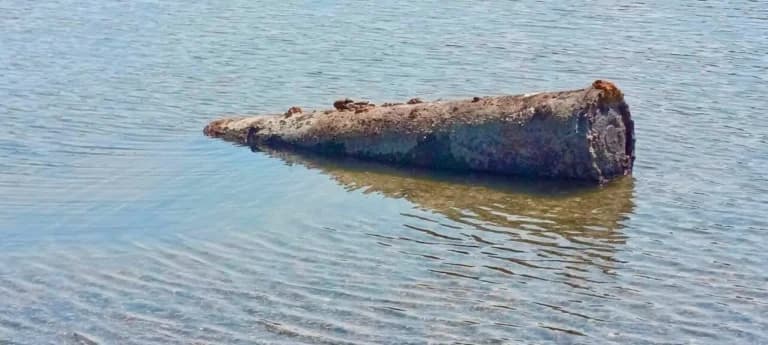
Near the Slovak village of Virt the water revealed a sea mine from World War II. Such finds are dangerous: sappers are called after every report.
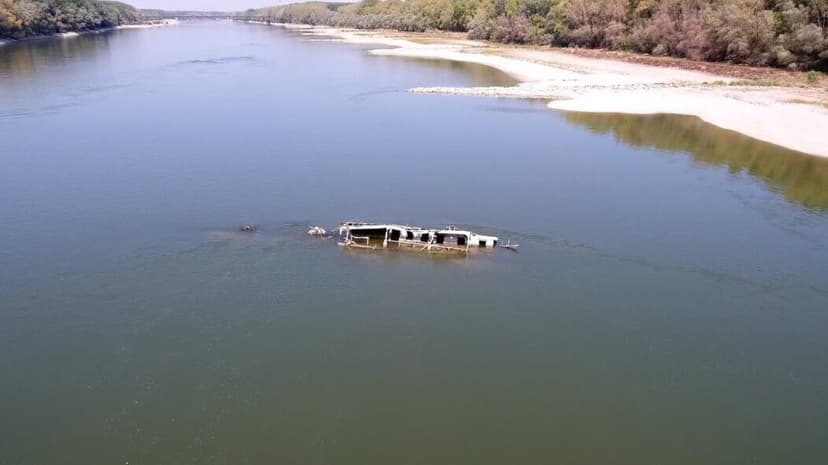
Near the Serbian Prahovo more than 20 ships of the German Black Sea fleet appeared from under the water. They were deliberately sunk in 1944 during the retreat before Soviet troops.
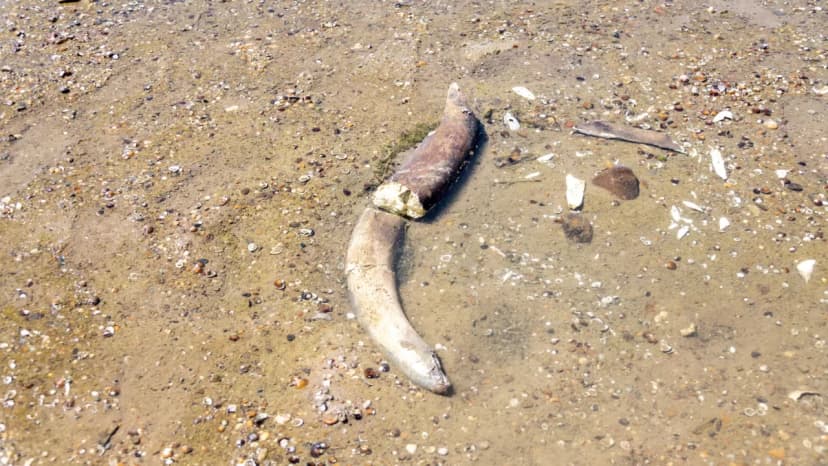
Near the Bulgarian village of Rjahovo a local resident found bones of a prehistoric mammoth, including a lower jaw and tusks.
Near the Hungarian island of Szalki archaeologists discovered a fragment of a Roman altar dedicated to the god Jupiter, and other limestone slabs with inscriptions.
Similar finds are recorded along the entire river — from ammunition to prehistoric remains.
Consequences of shallow water for life
Archaeology is interesting, but behind it are very practical problems that also concern those living in Slovakia.
River navigation has become seriously complicated: some large ships no longer pass the Slovak section of the Danube. International cruise routes are being shortened, and passengers on sections where passage is no longer possible are transferred to buses. If you planned a river cruise departing from or stopping in Slovakia — check the current route directly with the operator.
Another consequence is energy. Nuclear power plants use Danube water to cool reactors, and when there is little water and it is warm, there is nothing to cool with. In Hungary, this caused the temporary shutdown of the Paks nuclear power plant. For Slovakia, this is doubly sensitive: our nuclear power plants also depend on river water, and the energy systems of the countries in the region are interconnected.
Found something on the bottom — what to do
If during a walk along the Danube or another river you come across an item that looks old or suspicious, simple rules apply.
First, do not touch anything that looks like ammunition. Sea mines and shells that have been in the water for 80 years are still dangerous. Call the single emergency number 112.
Second, consider the law. In Slovakia, any archaeological finds — items created before 1918, as well as military equipment before 1946 — automatically become state property. You must report the find to the regional monument office (Krajský pamiatkový úrad). Keeping a Roman coin or a fragment of an ancient artifact is a violation of the law, not a “lucky day.”
Hydrologists do not yet promise a return of water to normal levels. So the chances of coming across something unusual on the exposed bottom of the Danube will be sufficient in the near future.