
Studying in Slovakia can cost from a few hundred euros to over 14 thousand per year — and in some cases, tuition fees can be zero. The decisive factors are not the student's citizenship, but the language of the program, the form of study, its duration, and the rules of the specific university.
For Ukrainians, there is another important point: after the new higher education law comes into effect on September 1, 2026, some rules have changed. Therefore, old instructions on the internet may contain outdated admission and payment conditions.
In Slovakia, it is also not advisable to choose a university only by ranking. It is better to first decide on the specialty and language of study, then the faculty, and only after that compare universities and cities.
How many universities are there in Slovakia?
As of September 2026, the state register Portál VŠ counts 40 higher education institutions, 117 faculties, and 5,106 study programs.
In the Slovak higher education system, there are four categories of institutions:
Type of university | Number | Features |
|---|---|---|
Public (verejná vysoká škola — public university) | 20 | mostly free full-time study in Slovak language |
State (štátna vysoká škola — state university) | 3 | specialized institutions subordinated to relevant ministries |
Private (súkromná vysoká škola — private university) | 10 | set tuition fees by their own rules |
Foreign (zahraničná vysoká škola — foreign university) | 7 | operate under the rules of the respective foreign institutions |
So the term “state university” in the Slovak context may not mean the same as in everyday Ukrainian language. Verejná vysoká škola means a public university, while štátna vysoká škola is a separate category of state specialized institutions.
The latter includes, in particular, the Police Academy, the Armed Forces Academy, and the Slovak University of Health Care.
Private universities also issue state-recognized diplomas. The main difference for applicants is in admission conditions and tuition fees.
Is it really possible to study for free in Slovakia?
Yes, but the phrase “studying in Slovakia is free” needs clarification.
In public and state universities, full-time study in the state language for the standard duration usually does not require školné (tuition fee). At the same time, fees may arise, for example, for study beyond the standard period, for certain cases of parallel study, or for programs conducted exclusively in a foreign language.
Therefore, applicants should look not only at general rules but also at the official tariff of the specific faculty for the relevant academic year.
There is another important difference:
školné — tuition fee for the study itself;
poplatok za prijímacie konanie — fee for application review and organization of the admission procedure.
Even if the study is free, an admission fee may be charged.
How much does studying in English cost?
There is no single price. It is set by the specific university or faculty, so the cost can vary several times.
According to tariffs for the 2026/2027 academic year, you can see approximately this range:
University | Program / Faculty | Fee per year |
|---|---|---|
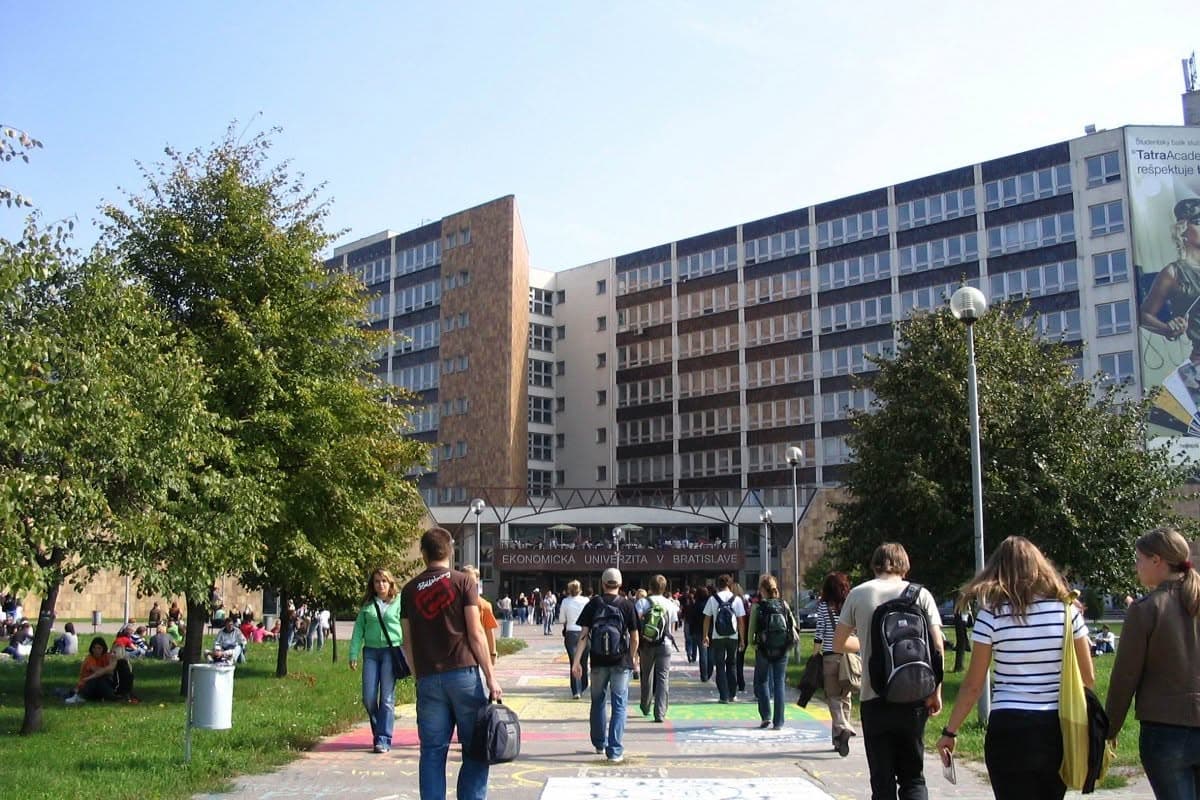
University of Economics in Bratislava | English-language bachelor programs | 1,500 € |
Prešov University | English-language bachelor | 1,500 € |
Slovak University of Technology | some English-language programs | from 2,000 € |
Trnava University | law in English | 2,000 € |
Žilina University | construction in English | 2,500 € |
Pavol Jozef Šafárik University | some natural science programs | about 3,000 € |
Slovak University of Technology | computer science in English | about 4,000 € |
Technical University in Košice | technical programs in English | up to 5,000 € |
Pavol Jozef Šafárik University | general medicine in English | 13,000 € |
Comenius University | dental medicine in English | 14,500 € |
These are rates for the 2026/2027 academic year, so before applying, it is worth checking the current tariff of the specific faculty.
What changed after September 1, 2026?
On September 1, 2026, the new Law No. 300/2025 Z. z. on higher education came into force in Slovakia. It changed the rules by which universities determine tuition fees and some other charges. The Slovak Ministry of Education also published separate clarifications on the application of the new law.
For applicants, this means that it is not advisable to rely only on information about tuition fees from previous years. Before admission, you need to check the current conditions specifically for the chosen program and academic year.
This is especially important for English-language programs: their cost may vary and depends on the specific university and program.
For students with temporary protection (dočasné útočisko — temporary asylum), the law also provides separate provisions. In particular, under certain legal conditions, a student may be exempt from tuition fees in case of exceeding the standard duration of study. At the same time, the temporary protection status itself does not mean that any study, including English-language, automatically becomes free.
Therefore, before submitting an application, it is worth checking the current tariff of the chosen university and the conditions of the specific study program.
Where to apply for a technical specialty?
If you are interested in IT, engineering, electrical engineering, construction, or transport, it is first worth comparing the Technical University in Košice, Slovak University of Technology in Bratislava, and Žilina University.
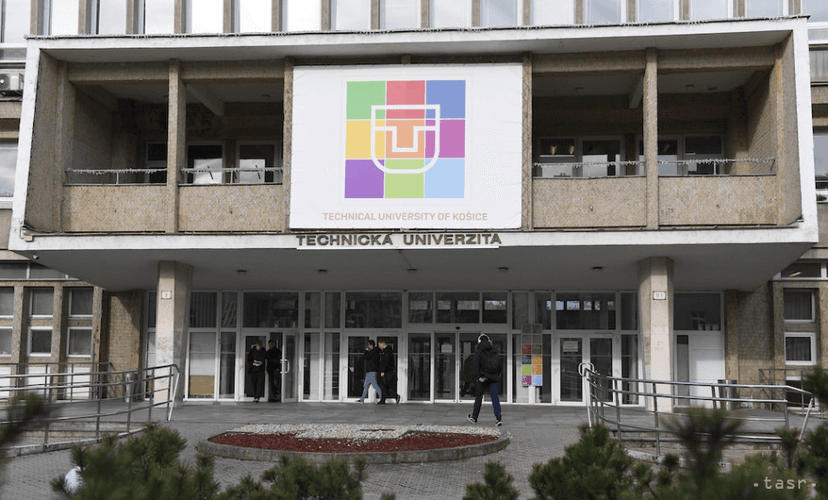
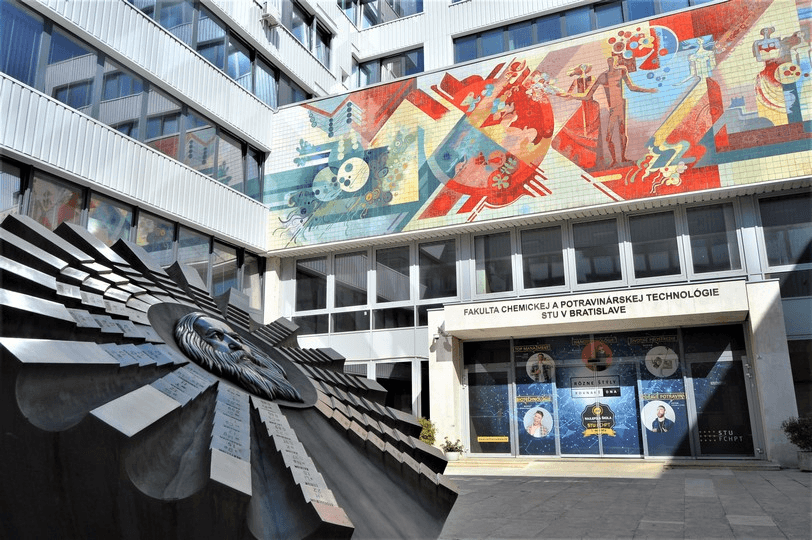
Technical University in Košice
Technical University in Košice is one of the largest technical universities in the country. It has faculties related to mining and ecology, materials and metallurgy, mechanical engineering, electrical engineering and informatics, construction, economics, arts, and aviation.
English-language programs at some faculties can cost up to 5,000 € per year. For example, the English-language bachelor program Air Transport Management in the 2026/2027 academic year has a maximum fee of 5,000 €.
Slovak University of Technology in Bratislava
Slovak University of Technology has faculties of construction, mechanical engineering, electrical engineering and informatics, chemistry and food technology, architecture, materials science, and informatics.
For applicants, it is important not to confuse FEI and FIIT. FEI is the Faculty of Electrical Engineering and Informatics, present both in Košice and Bratislava. FIIT is the Faculty of Informatics and Information Technologies.
In 2026, STU also launched a new English-language program related to artificial intelligence together with TUKE.
Žilina University
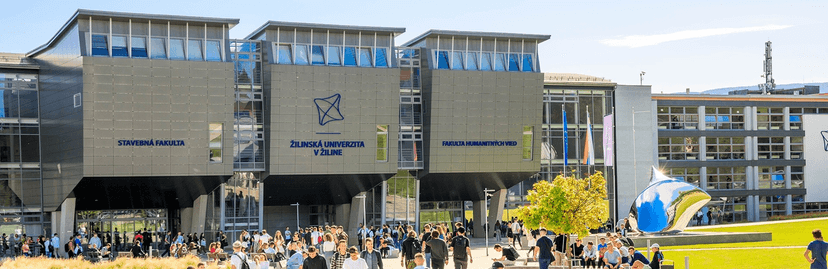
Žilina University has a strong profile in transport, communications, informatics, electrical engineering, construction, and safety.
For 2026/2027, English-language programs at most faculties cost 3,500 € per year, while at the Faculty of Construction, some programs start from 2,500 €.
If your future profession is related specifically to transport or railways, Žilina University should be considered separately, not just as an alternative to Bratislava or Košice.
Where to study medicine, law, or philology?
Comenius University
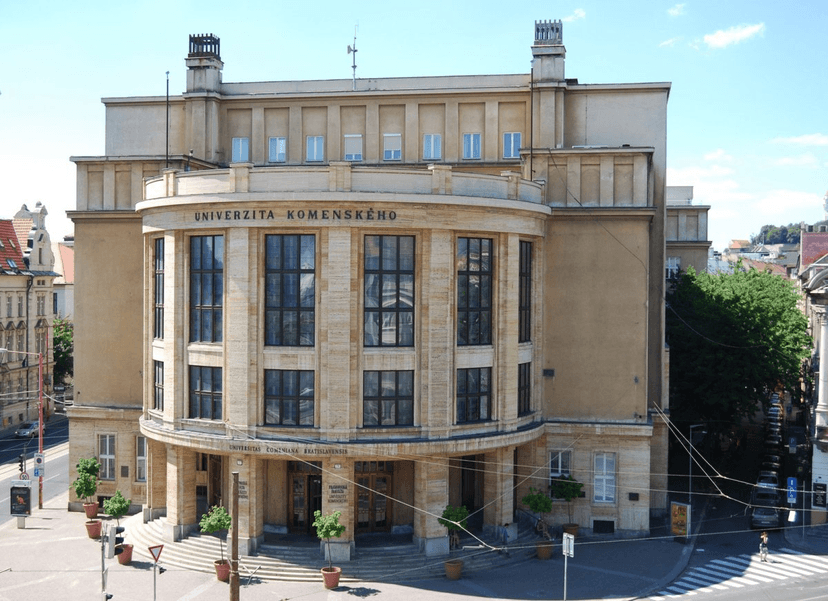
Comenius University in Bratislava is the largest and one of the broadest universities in the country. It has medical, law, philosophy, natural sciences, pharmacy, pedagogy, and other faculties.
Medical programs in English are paid. For 2026/2027, general medicine costs 13,000 € per year, dentistry — 14,500 €.
Pavol Jozef Šafárik University
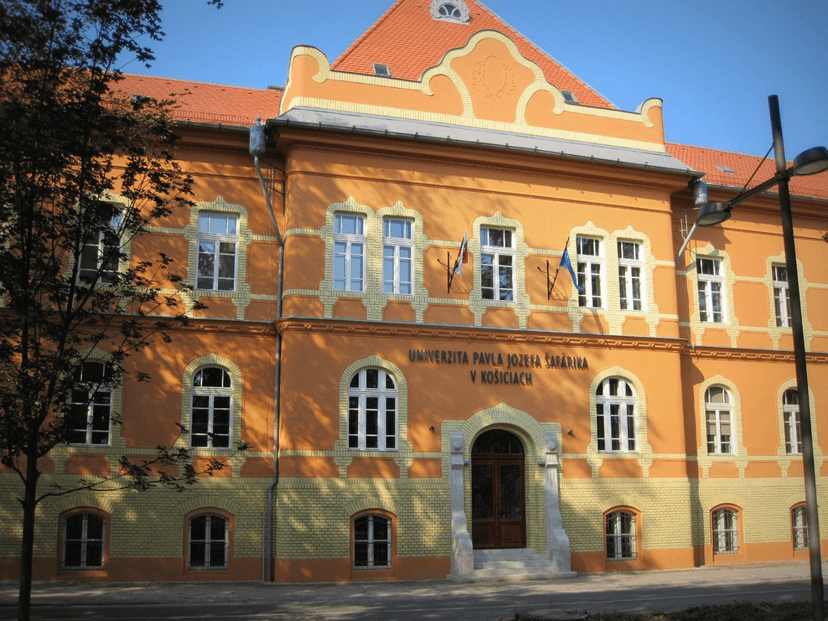
Pavol Jozef Šafárik University in Košice has medical, natural sciences, law, philosophy faculties, and a faculty of public administration.
English-language medicine is one of the most expensive fields at the university. In contrast, study in Slovak within the standard duration at a public university usually does not require tuition fees.
Prešov University
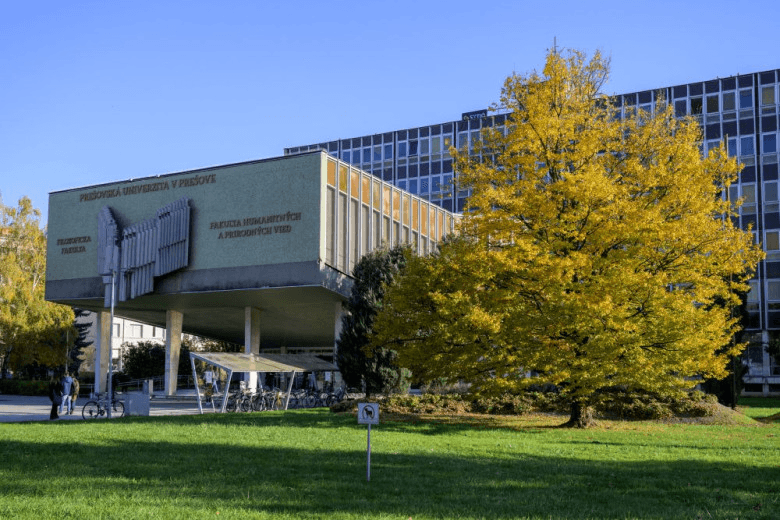
Prešov University has humanities, pedagogy, sports, and other profiles.
It is especially interesting for Ukrainians because the university has programs related to the Ukrainian language and culture. Among English-language programs, there are also options with fees around 1,500 € per year.
Economics, pedagogy, and agricultural specialties
Economic education should not be sought only in Bratislava.
University of Economics in Bratislava has seven faculties, one of which — Podnikovohospodárska fakulta — operates in Košice.
At the same time, two different universities operate in Nitra, which should not be confused. Slovak University of Agriculture specializes in agricultural, food, biotechnological, economic, and technical fields. Constantine the Philosopher University has mostly humanities and social profiles.
In Trnava, there are also two universities with different specializations: Trnava University and University of St. Cyril and Methodius.
Therefore, when searching, it is worth entering not only the city name but also the specific specialty.
What do FEI, FIIT, SjF, SvF, and LF mean?
In Slovakia, applicants often search not for a university but for a specific faculty. The faculty defines the program, admission requirements, some fees, and often the tuition cost.
The most common abbreviations:
FEI — Fakulta elektrotechniky a informatiky (Faculty of Electrical Engineering and Informatics);
FIIT — Fakulta informatiky a informačných technológií (Faculty of Informatics and Information Technologies);
SjF — Strojnícka fakulta (Faculty of Mechanical Engineering);
SvF — Stavebná fakulta (Faculty of Civil Engineering);
FF — Filozofická fakulta (Faculty of Philosophy);
PraF — Právnická fakulta (Faculty of Law);
PdF — Pedagogická fakulta (Faculty of Education).
Special attention should be paid to the abbreviation LF. At TUKE, it can mean Letecká fakulta (Faculty of Aviation), while at Pavol Jozef Šafárik University it means Lekárska fakulta (Faculty of Medicine).
Therefore, before submitting an application, it is worth checking the full name of the faculty and not relying only on the abbreviation.
What scholarships are available to students?
Various types of student financial support operate in Slovakia, but the conditions differ.
Social scholarship is provided for students who meet the conditions established by law. The new law explicitly mentions, among others, students with permanent residence in Slovakia, international or additional protection, as well as temporary protection.
Motivational scholarships can be awarded based on academic results or for studying in certain fields.
There is a separate program “Študujem doma, Slovensko ma odmení” (“I study at home, Slovakia rewards me”). In the 2026/2027 academic year, it provides 1,206 talent scholarships for domestic students. The maximum support amount can be up to 12,000 € for the entire bachelor period.
There is also a separate program for shortage specialties: for the 2026/2027 academic year, 1,800 scholarships are provided, each amounting to 4,000 € per academic year or 400 € per month.
Therefore, before admission, it is worth checking not just “if there are scholarships,” but whether a specific student has the right to a specific support program.
How to choose a university in Slovakia?
The most convenient way is to act not from the university name but from the future profession.
1. First, determine the specialty.
Choose several specific study programs and compare them.
2. Check the language of instruction.
Slovak, English, or another language can mean fundamentally different tuition costs.
3. Look at the faculty.
It is the faculty that defines admission requirements, the program, and many practical details.
4. Calculate city expenses.
Bratislava usually requires a bigger budget for housing than Košice, Prešov, or smaller cities.
5. Apply for dormitory separately.
Admission to the university does not automatically mean getting a place in the dormitory.
6. Check the possibility to work during studies.
Conditions depend on your residence status and type of permit.
7. Check deadlines specifically for your faculty.
Do not rely on last year’s dates: universities and faculties may set different deadlines.
What is the result?
For an applicant, the main difference between Slovak universities is not so much in ranking but in specialty, faculty, language of instruction, form of study, and cost.
The same country can offer full-time study in Slovak without školné and English-language medicine for 13,000–14,500 € per year. Therefore, the phrase “studying in Slovakia is free” without specifying language and program can mislead applicants.
For Ukrainians with temporary protection, there are additional opportunities, including the right to claim a social scholarship if certain conditions are met. But the rules for paying for English-language programs, admission fees, and other payments must be checked according to the current documents of the specific university.
The most reliable scheme is simple: first specialty → then faculty → then language and form of study → after that price and city. This order allows you not to choose a university only by name and immediately see the real cost of study and living.