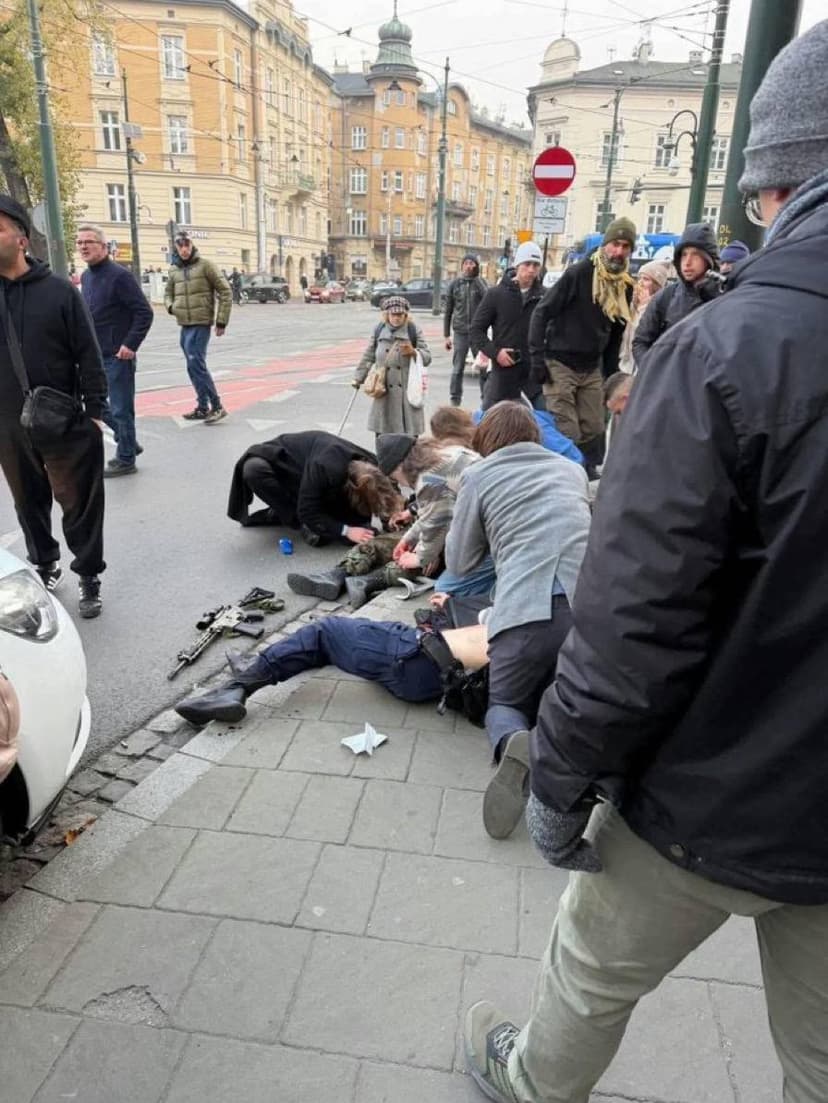

On Saturday, November 7, at around 3:00 p.m., one of the most horrific tragedies in modern Polish history unfolded in the center of Kraków on the Main Market Square (Rynek Główny). Michał Oksiński, a 24-year-old local resident dressed in military camouflage, a helmet, and a bulletproof vest, drove his car into a pedestrian zone and opened fire indiscriminately on passersby with a semi-automatic rifle.
The horrific attack in the city center claimed the lives of six people, while another 15 were injured to varying degrees. At the same time, during a search of the attacker’s residence, law enforcement officers discovered the bodies of three more of his closest relatives. The total number of victims of this bloody massacre reached nine, and the attacker himself died in the hospital from injuries sustained during his arrest.
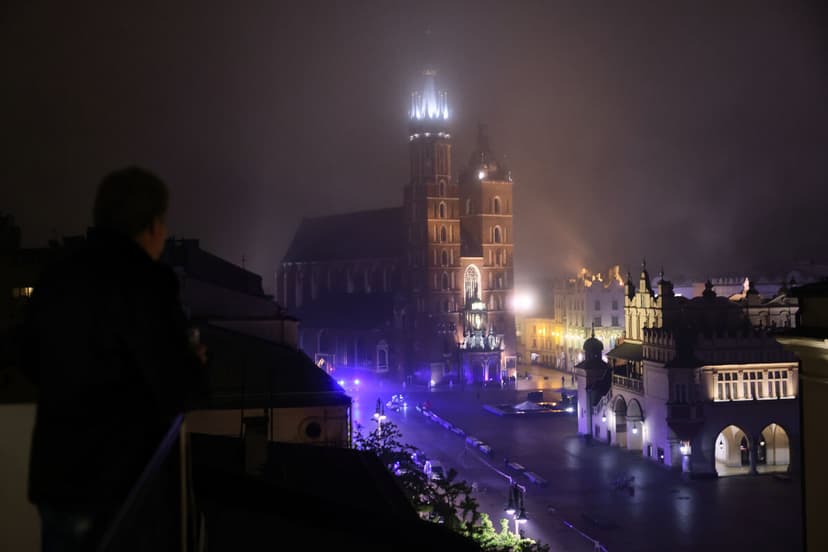
In response to the tragedy, which Polish authorities officially classified as a terrorist act, Poland declared a nationwide day of mourning, while neighboring Slovakia and the Czech Republic immediately implemented heightened security measures.
Timeline of the attack: from the shooting to the chase
A black car driven by the attacker pulled into the historic square in broad daylight. From the car window, the man opened targeted fire on civilians, passenger vehicles, and store windows.
Special forces and patrol officers arrived at the scene immediately and returned fire just three minutes after the first emergency call. The attacker attempted to flee, but after a brief chase, his car collided with another vehicle. During his arrest, the assailant actively resisted and wounded two law enforcement officers (one of whom is in critical condition). The assailant himself was seriously wounded—he died in the hospital on Monday morning.
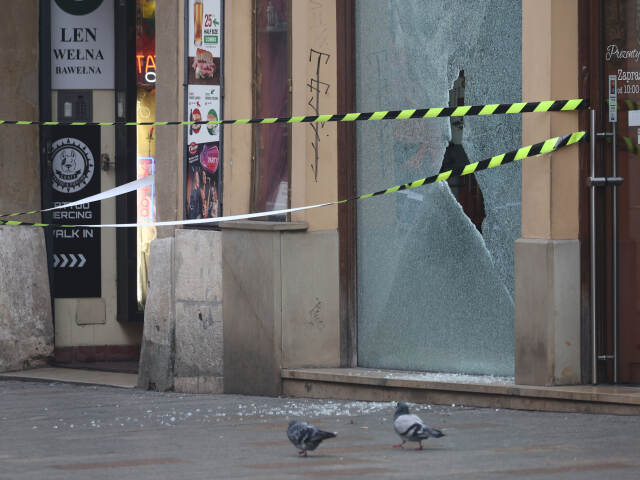
Casualties at the scene: Four women and two men (including one foreign national) were killed. Of the 15 injured, five were foreign nationals.
The Heroic Act of Slovak Students in the Midst of Chaos
At the time of the shooting, a group of 54 Slovak tourists was on Main Square. While the tour guides were trying to quickly shelter the tourists in the safe rooms of nearby establishments, two medical students from Slovakia—Linda and Mario—rushed to help a seriously injured young woman.
The victim had a through-and-through gunshot wound to the neck. The young medical students, disregarding the risk to their own lives, performed CPR right on the cobblestones until the ambulance crews arrived.
Shooting of His Own Family Before Heading into Town
That same evening, an anti-terrorist police unit, using drones and specialized equipment, stormed the attacker’s apartment in Ostrowiec Świętokrzyski.
Inside the apartment, investigators discovered an arsenal of seven firearms and the bodies of three people who had been killed:
the shooter’s 53-year-old father;
his 52-year-old mother;
his 21-year-old sister.
Law enforcement officials confirmed a direct link between the shooting of the family at home and the subsequent terrorist attack in Kraków.
The identity of the attacker and debunking misinformation
Immediately after the attack, disinformation began to spread rapidly on social media and certain websites. Some accounts attempted to blame Ukrainians for the attack, spreading false claims about the shooter’s “foreign origin,” “mercenary” status, or military affiliation.
Polish authorities refuted these claims and released the actual facts:
Parameter | Official investigation findings |
Identity of the attacker | Michał Oksiński, a 24-year-old Polish citizen with no prior criminal record. |
Connection to the military | None. He has never served in the Polish Armed Forces. |
Weapon | Legal (he had an official permit). |
Motive | Fascination with far-right radical ideologies and extreme views. |
Polish Interior Minister Marcin Kierwiński and Defense Minister Władysław Kosiniak-Kamysz officially classified the act as a terrorist attack.
International Reactions and Tighter Security Measures in Slovakia
In light of the tragedy, the President of Poland declared November 8 and 9 days of national mourning, and in Kraków, commemorations will continue until November 11.
The events in the neighboring country prompted the authorities in Slovakia and the Czech Republic to take preemptive action:
Slovakia’s response: The Ministry of the Interior announced a shift to heightened security measures throughout the country.
The number of patrols has been increased on city streets, at train stations, and in shopping centers.
Security forces are equipped with body armor and long-barreled weapons.
Additional teams of plainclothes operatives have been deployed to covertly monitor the situation.
Special surveillance will be in place at mass events and Christmas markets.
Measures in the Czech Republic and Poland: In Warsaw and other major cities, pedestrian zones are being blocked off with concrete barriers, while in the Czech Republic, additional checkpoints are being set up in areas where large crowds gather.