

The green zone near your home, a playground square, a park where you walk your dog — these are now the highest risk places to meet an infected tick. In urban parks and gardens of Slovakia, the share of ticks infected with borrelia bacteria averages 35%. In natural areas outside the city — 15–20%. Scientists explain the difference by the spread of a new urban tick population (živnosť — trade license), which is more infectious than the “forest” one. They warn — this year there are more ticks than in previous seasons.
In the first half of 2026, over 2500 cases of Lyme disease were registered in Slovakia. This is almost 25% more than in the same period last year. The trend has been worrying for several years: in 2024 there were 2400 cases, in 2025 — over 3000. According to virologists, 40 to 75% of ticks are infected with borrelia, depending on the location.
Where it is most dangerous
Cases of the disease are registered in all regions of the country, but the stable anti-record is in Trenčiansky kraj (Trenčín Region). Among districts, the highest incidence is recorded in Púchov and Ilava, reported by Úrad verejného zdravotníctva (Public Health Office).
The problem is worsened by another circumstance: urban parks and squares are not treated with anti-tick agents for ecological reasons. Ten years ago, ticks in the city were rare; today their number in green zones has increased many times. An interactive map by the Slovak Academy of Sciences helps assess the risk in a specific region — it is based on citizen reports of tick findings.
Long season and quiet course
The tick activity season has noticeably lengthened. It lasts from March to November, and with mild winters, parasites are active even in cold months — as long as the temperature stays above +5°C. The peak is from April to July, the second wave is in September-October. So now, in August, the danger has not gone away, and another rise is ahead.
You can get infected not immediately. If you remove the tick within the first hours, the risk is minimal. But if it stayed on the skin for more than 24 hours, the chance of borrelia transmission sharply increases.
What the disease looks like
The first typical symptom is a ring-shaped redness at the bite site, which gradually expands. The diameter of the spot is at least five centimeters, appearing 2–30 days after attachment. Such a “bullseye” is a reason to immediately see a doctor, not wait for it to go away on its own.
At an early stage, Lyme disease is well treated with antibiotics. Without treatment, the infection affects joints, the nervous system, and the heart — and then everything becomes much more complicated. If symptoms have already appeared or you need a consultation with a Slovak infectious disease specialist (OSVČ — self-employed person), you can find a specialist through our specialist directory.
You can check the tick
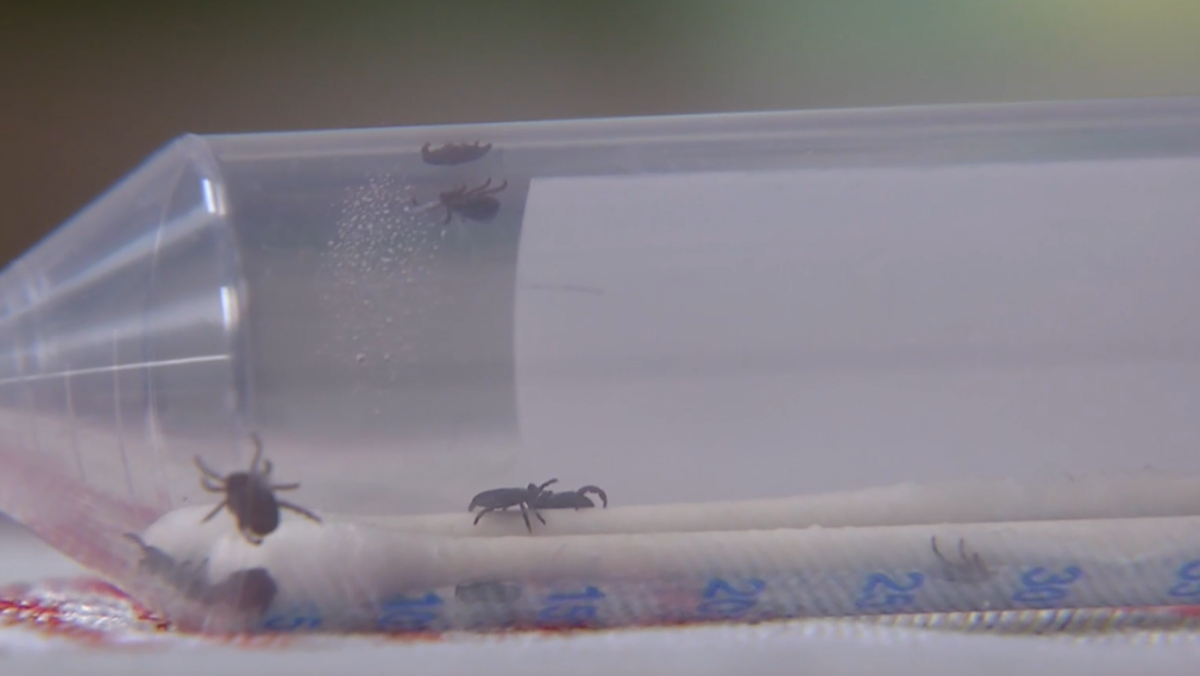
Few people know this: a removed tick does not have to be thrown away. You can send it to Ústav zoológie Slovenskej akadémie vied (Institute of Zoology of the Slovak Academy of Sciences), where they will check if the parasite was infected. This helps understand if treatment is needed and avoid taking antibiotics “just in case.”
If you found a tick on your body:
Remove it as quickly as possible with tweezers, grabbing close to the skin, and pull straight up without twisting.
Disinfect the bite site and wash your hands.
Watch the skin for at least a month — redness may appear with a delay.
If you want, send the tick for analysis to the Institute of Zoology SAV.
No vaccine yet — but close
Unlike tick-borne encephalitis, there is still no vaccine against Lyme disease. The only hope is a drug currently in the final stage of clinical trials. According to Slovak infectious disease specialists, vaccination may become available in about two years.
For now, the only protection is prevention: repellents, closed clothing in grass and bushes, careful body checks (both children and dogs) after every walk. Neighboring Czechia this summer is breaking incidence records: 8108 cases since the beginning of the year and an average of 90 new cases daily in July. Partly this is due to a new reporting system, but doctors also recognize real growth. The climate is the same, the ticks are the same — so Slovak statistics in the coming months are unlikely to please.