


Free živnosť (sole-trader licence — self-employment) in Slovakia is registered electronically for 0 €. At the counter, the same application costs 7 €, craft or tied živnosť (sole-trader licence — self-employment) costs 11 € electronically and 22 € on paper. Osvedčenie o živnostenskom oprávnení (document proving the right to conduct živnosť) is issued no later than three working days, and the IČO is already printed on it.
Živnosť (sole-trader licence — self-employment) is entrepreneurial activity of a fyzická osoba (natural person — an individual, including a sole trader) in their own name under the živnostenský zákon (trade licensing law) (zákon č. 455/1991 Zb.); the closest Ukrainian equivalent is FOP. A separate právnická osoba (legal entity — a company) does not arise: you are registered by the district government, not the court, no registered capital is needed, and you are personally liable for business debts.
Search results for the same procedure ask for 60, 105, 899, and 1,700 €. The last figure Google now shows as a ready answer to the question “how much does it cost to open živnosť.” The money goes for translation of certificates, electronic signature, selection of activity codes, and legal address — real services, but most people need only one of the four. If you have not yet decided whether you want živnosť (sole-trader licence — self-employment) or s.r.o., first read the analysis on how to start a business in Slovakia. Next is the procedure itself.
Who can open živnosť?
The conditions are the same for Slovaks and Ukrainians: 18 years old, legal capacity, no criminal record. Qualification must be proven only for two of the three types of živnosť (sole-trader licence — self-employment).
For holders of temporary protection, business was allowed later than work. Until July 15, 2024, § 59 ods. 5 of the law on foreigners’ residence (zákon č. 404/2011 Z. z.) left no options: during tolerated stay, a foreigner could not do business. The current version added an exception — “to neplatí, ak ide o štátneho príslušníka tretej krajiny, ktorému bolo poskytnuté dočasné útočisko,” and Migračné informačné centrum IOM summarizes this briefly: “Taktiež sa im umožní podnikať.” Materials from 2022–2023 claim the opposite, and search still mixes them in answers. If you see the phrase “a holder of temporary protection cannot do business” — check the date of the text.
Živnosť (sole-trader licence — self-employment) itself does not grant residence rights. Prechodný pobyt na účel podnikania (temporary residence for business purposes) is a separate story: application through the embassy, annual quota, business plan in attachments. Therefore, those who already have temporary protection do not need this path.
Pros and cons of the form itself — personal liability, contributions in months without income, simpler accounting than a company — are weighed in the analysis živnosť or s.r.o..
What documents are needed?
The submission package is short — six items:
- form Ohlásenie živnosti pre fyzickú osobu (notification of živnosť for a fyzická osoba (natural person — an individual, including a sole trader));
- foreign passport;
- proof of residence status;
- extract from the criminal record, not older than three months;
- proof of the right to use the property at the miesto podnikania (place of business) address — if it does not coincide with your residence;
- chosen health insurance: VšZP, Dôvera, or Union.
The most expensive item on this list is often unnecessary. According to § 46 ods. 5 of the živnostenský zákon (trade licensing law), the extract is taken from the country of citizenship or from the country where the person has demonstrably lived for at least six consecutive months in the last five years. If you have lived in Slovakia for more than half a year — submit the Slovak criminal record certificate. The Ukrainian extract with apostille and official translation is not needed in this case, although the short search answer requires it.
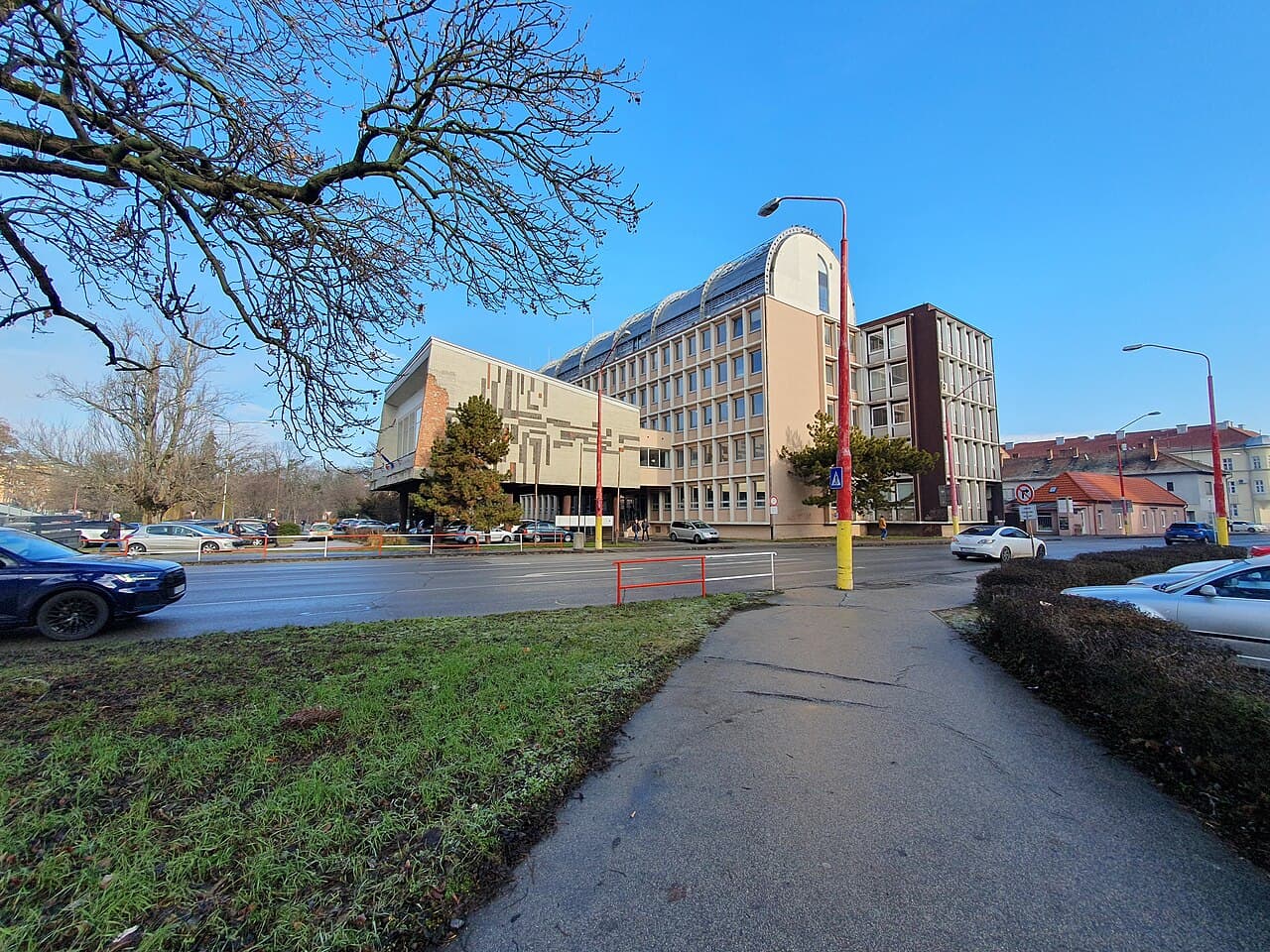
 Photo: Akul59, Wikimedia Commons, CC BY-SA 4.0
Free, craft or tied — where does your profession fit?
The difference between the three types is only whether you have to prove qualification with documents.
Voľná živnosť (free) requires nothing but the three general conditions. This includes computer services and data processing, courier services, preparatory work for construction, interior finishing work, cleaning services, intermediary trade activities, and bookkeeping. The recommended list contains 72 names. It is indicative — you can invent your own wording, but applications from the list are processed faster.
Remeselná živnosť (craft) is a closed list from appendix No. 1 to the law: eight sector groups, from “101 — Výroba kovov a kovových výrobkov” to “114 — Ostatné.” The last includes household services: hairdressing, cosmetic services, chimney sweeping. Manicure and pedicure are listed there as separate items. This is where Ukrainian masters most often stumble: they apply as free živnosť (sole-trader licence — self-employment) but receive a request to prove education.
Viazaná živnosť (tied) adds a separate permit or certificate. A classic example is massage services: appendix No. 2 requires an accredited course.
Qualification is proven not by one specific document. The shortest path is výučný list (apprenticeship certificate) in the relevant field (§ 21). Substitutes are listed in § 22: a certificate in a related field plus six months of practice; a maturity certificate in the same field plus the same six months; or six years of practice in the field, no more than four years ago. A Ukrainian diploma is suitable but must be translated and recognized — separate money and weeks, better planned in advance.
How much does it cost to register živnosť?
From zero to 22 € per type of activity — depending on what you register and how you submit.
| Action | On paper | Electronically |
|---|---|---|
| Free živnosť, per each | 7 € | 0 € |
| Craft or tied, per each | 22 € | 11 € |
| Changes in issued certificate | 5 € | 0 € |
| Suspension of živnosť | 4 € | 2 € |
Figures are from the official fee schedule published by Ministerstvo vnútra SR: this is item 148 of the appendix to the law on administrative fees (145/1995) in the version effective from April 1, 2024. Before that day, free živnosť cost 5 €, craft 15 €. That is where the 5 € fee in Ukrainian texts comes from: it really was two years ago. Zero in the electronic column is not a promotion: the note to this item exempts free živnosť, certificate changes, and extracts signed with a qualified electronic signature from fees, and the rest get half the rate.
The state fee is not the whole expense. Additional costs may include Slovak criminal record extract, official translation of foreign documents, notarization of the apartment owner’s signature, and qualified electronic signature. Slovak services sell virtual addresses for about 45 € per year — needed only if the property owner does not give you their address.
Now compare with prices for issuance: 60, 105, 899, 1,700 €. This is the cost of someone else’s time, not the state tariff.
How to submit ohlásenie (notification) online and when is it easier to go in person?
Electronic submission saves 7 € and queue but requires three things at once: doklad o pobyte (document of residence) with a chip, activated BOK, and certificates for qualified electronic signature. BOK is set personally when issuing the card, certificates are obtained online — how it works is explained in the article about BOK code.
Those who have only paper proof of status or no certificates go in person: a normal way, costs 7 €, and closes in one visit.
Step 1. Choose types of activities. One application can contain several. Free are cheaper, craft and tied require qualification documents.
Step 2. Gather attachments. The same as in the list above, plus education or practice documents if needed.
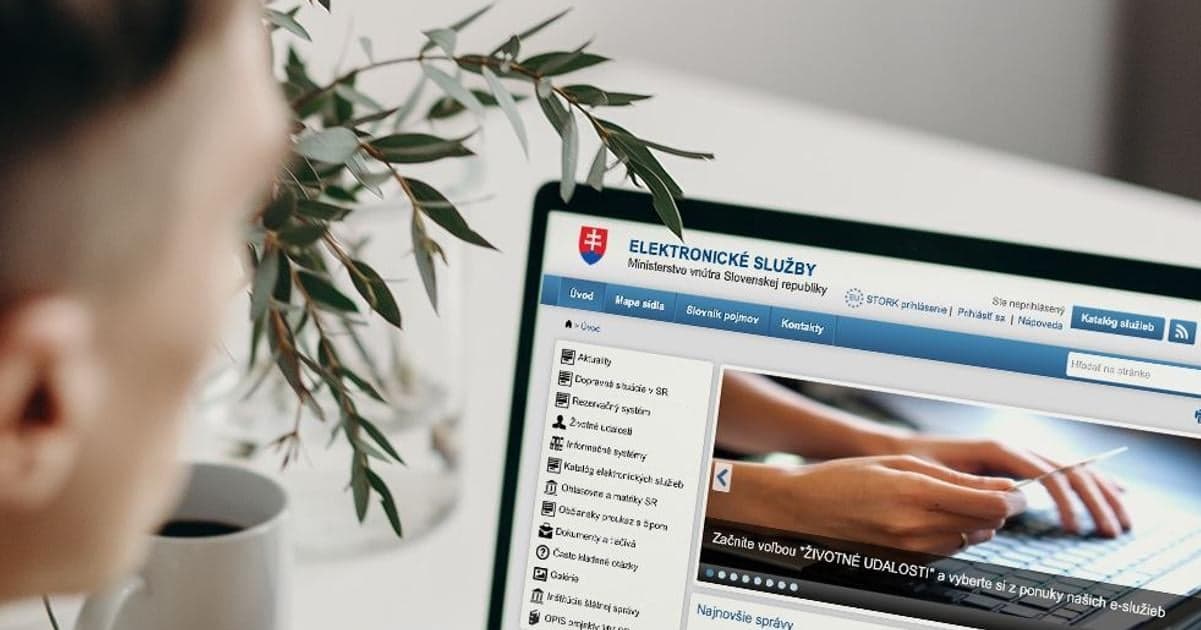
Step 3. Submit the application. In person — to jednotné kontaktné miesto (single contact point) at the živnostenský úrad (trade licensing office) department of the district government at your miesto podnikania (place of business) address. Online — via slovensko.sk with the same form.
Step 4. Pay the fee. For free živnosť online, pay nothing. For craft or tied — 11 € each.
 Photo: minv.sk, Wikimedia Commons, CC0
What happens after submitting the application?
The right to work arises on the day of application submission — or from a later date you enter in the form. The submission day is counted as the day when the application has all the required details. The certificate is issued by the government within three working days from the day it received both the application and criminal record extracts. IČO is assigned by Štatistický úrad SR (Statistical Office of the Slovak Republic) on request — the number is already on the ready document.
Three institutions learn about you without your participation. Data for tax registration and health insurance are sent by the živnostenský register (trade licensing register) itself as soon as the right arises (§ 60b of the law), and Sociálna poisťovňa (social insurance institution) has access to the register under the same paragraph. The tax office registers you and issues DIČ; the queue at its window at this stage is just a wasted day.
You have little left: choose insurance in the form and watch your email. Opening a separate bank account is not mandatory — the financial transaction tax does not apply to živnosť (sole-trader licence — self-employment) at all: the law names only právnická osoba (legal entities — companies) as payers.
Another internet instruction is completely outdated: entry in Obchodný register (Commercial Register) is not needed for fyzická osoba (natural person — an individual, including a sole trader) — the registry court removes natural persons from it since October 1, 2020 (§ 768s Obchodného zákonníka, amendment č. 390/2019 Z. z.).
When you get IČO, check yourself as contractors do: by number in the register of companies and živnosťs. The entry must contain your types of activities exactly as you submitted. Errors are corrected with the same 5 € on paper and zero electronically, but better do it before the first client invoice, not after.
Why do you have to submit the application twice?
Four reasons cover most returns.
Craft živnosť submitted as free. The most common case — manicure, pedicure, hairdressing, and cosmetic services. The government does not refuse immediately: under § 47 ods. 6 it calls to provide documents and gives at least 15 days. If you miss the deadline — the procedure is suspended, and you start over.
Criminal record extract expired or without translation. Three months are counted to the day of submission, not the day you ordered it. Foreign documents are accepted only with official Slovak translation.
Right to the address not proven. If miesto podnikania (place of business) does not match your residence, § 46 ods. 1 requires proof of the right to use it — lease agreement or owner’s consent. The signature on the consent must be notarized or certified at the matrika (registry office at city government), and a simply printed sheet is returned.
Incomplete set. The submission day is the day when the application has all details. A forgotten attachment delays not only certificate issuance but also the date from which you can issue invoices.
The most expensive mistake of a živnostník (sole trader) lies not in the application. Živnosť opened for one client who dictates your schedule and workplace is švarcsystém, hidden employment instead of a labor contract. The labor inspection qualifies this as illegal employment, and from January 1, 2026, the fine is 4,000–200,000 €, and for two or more persons simultaneously — at least 8,000 €. The client formally pays, but without a contract you remain liable: if you have only one client, return to the analysis “živnosť or s.r.o.” — the choice of form there matters more than the procedure.
How much does a živnostník pay in the first year and later?
The first six months — only health insurance contribution 121.92 € per month. Social insurance starts from the seventh month.
| Period | Social | Health | Total per month |
|---|---|---|---|
| Months 1–6 after start | 0 € | 121.92 € | 121.92 € |
| From 7th month | 131.34 € | 121.92 € | 253.26 € |
| Later, income over 9,144 € | 303.11 € | 121.92 € | 425.03 € |
The average amount was introduced by the July contribution reform: from July 1, 2026, it is called mikroodvod and amounts to 131.34 € per month. Those who earned 2,876.90 € or less the previous year pay no social insurance at all. Up to 9,144 € the same micro contribution remains.
The holiday count is exact: Sociálna poisťovňa (social insurance institution) gives its own example — start February 15, 2026, social contributions from August 1, 2026. Health contributions start from the first day of status, no holidays for them at all.
Payment day is the same for both contributions — the 8th of the next month.
Cheap start has a price, and that price is experience. Months of holidays pass without social insurance, and materské (maternity benefits) are given only after 270 days of such insurance in the last two years before childbirth. With sick leave (nemocenské) it is different: a properly insured živnostník has the right from the first day of incapacity — but in holidays there is no insurance, so no sick pay. Enter your numbers in the živnostník calculator.
How do flat-rate expenses of 60% work?
Flat rate is the right to deduct 60% from income without collecting any receipts. The upper limit of deduction is 20,000 € per year, and paid contributions are deducted additionally, above that.
The tax itself is 15%, and this rate works until the annual turnover exceeds 100,000 €. The non-taxable part is also deducted: for 2026 it is 5,966.73 €.
Actual expenses are more profitable when they exceed 60% of income: purchase of goods, rent, materials. For a freelancer with a laptop, flat rate almost always gives more: collecting receipts for 60% of income when the only equipment is already bought is simply impossible.
Two categories cannot use flat rate: VAT payers for the whole year and income from property rental.
No declaration is filed at all if taxable income for the year did not exceed half of the non-taxable part — for 2026 this is 2,983.37 €. Otherwise, the deadline is March 31, 2027; it can be extended by three months by a notice on the financial directorate’s form sent by the same date, and with foreign income — by six months. What exactly goes into the declaration is explained separately in the article about filing daňové priznanie (tax return).
When does a živnostník become a VAT payer?
There are two thresholds, counted by calendar year. Turnover exceeded 50,000 € — you become a VAT payer from January 1 of the next year. Exceeded 62,500 € — you become a payer on the same day. How much is left to the threshold is shown by the VAT calculator.
There is a third case almost silent in Ukrainian-language results. You provide a service to an entrepreneur from another EU country — development for a Polish company, design for a German one — and under § 7a of the VAT law you must apply for an IČ DPH before the first such operation. Regardless of amount. Even 50 €. The tax office assigns the number within ten days. This does not make you a domestic Slovak VAT payer — so states the financial administration itself. You continue to issue invoices to clients in Slovakia without tax, just have a number for intra-EU operations. The rule works in reverse: you buy advertising, hosting, or subscription from a company in another EU country — you apply before the first such purchase.
The late registration penalty increased from January 1, 2026: the fine for late registration is now 100 to 30,000 € instead of the previous 60–20,000 €.
The VAT threshold usually becomes the moment when a živnostník first counts as a company: how much it costs to register s.r.o. — with state fees, capital, and deadlines.
How to suspend or close živnosť?
Suspension costs 4 € on paper and 2 € electronically. It can be done for any period — the law has not set minimum or maximum limits since August 1, 2021. The application specifies the exact period, from date to date.
The rule “from one month to three years,” which search still shows in short answers, does not apply — and never did in that form. Until July 31, 2021, § 57 required otherwise: not shorter than six months and not longer than three years. The clause was completely removed.
What is suspended is social insurance. Health insurance remains your responsibility: for each day of suspension you pay as a self-payer, in 2026 it is the same 121.92 € per month. The district government notifies the tax office and both insurance companies about the suspension.
Closure is done by notification of business termination, and the government also notifies the tax office, not you.
If you submit the application this month, count one date ahead. Živnosť opened in August 2026 activates social contributions on February 1, 2027, and the first health contribution must be paid by September 8, 2026. Put both dates in your calendar now, before submitting the application.
 Photo: Pexels