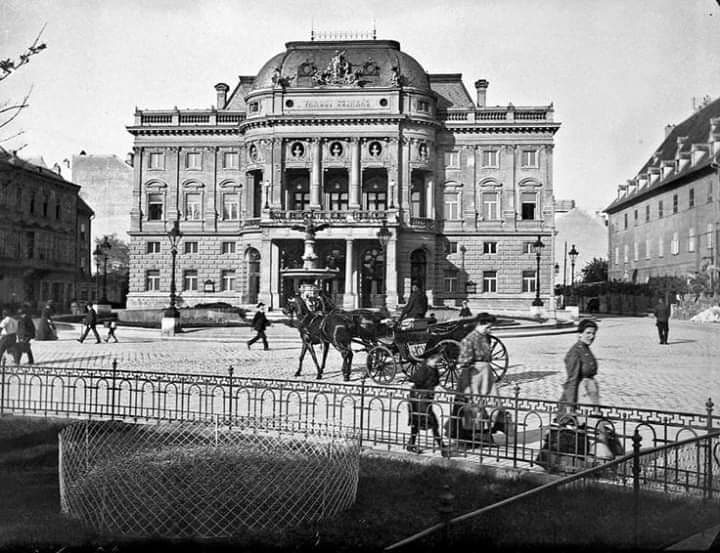

The application to a Slovak state kindergarten is accepted for one month per year. In 2026, the window was open from May 1 to May 31, directors decided by July 8, and children joined groups on September 1. Missed it — the next chance is only in spring.
If the child is already six years old, you need a different route: enrollment to primary school follows other rules and different dates.
What kinds of kindergartens are in Slovakia and who is accepted where?
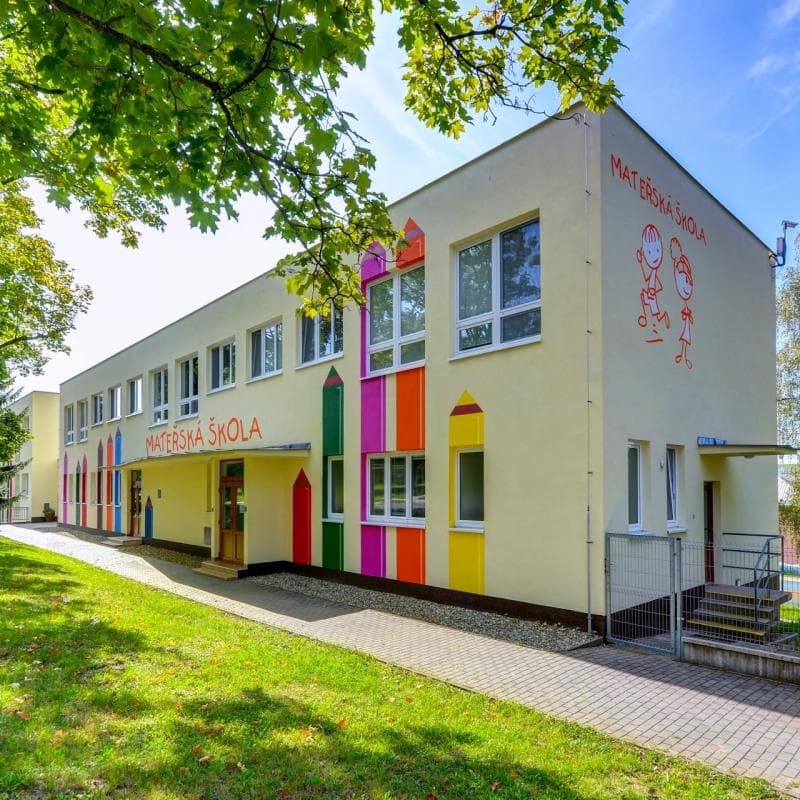
Materská škola (kindergarten) accepts children from three years old. From two years — only as an exception: if the child has mastered basic self-care skills, and the kindergarten has a free place and conditions for toddlers. The word “exception” in § 59 of the school law is not decorative: two- to three-year-olds are accepted on a residual basis.
Jasle — is not a younger group of kindergarten, but a completely different structure. Legally, it is a social service: zariadenie starostlivosti o deti do troch rokov veku dieťaťa provides care, nutrition, and upbringing while the parent works, studies, or returns to the labor market. The service is provided until August 31 immediately after the child’s third birthday. In one day room, which serves as both playroom and bedroom, there can be at most 12 children — up to 15 if none are under one year old.
Groups in kindergarten are also limited. The law restricts them to 20 children aged 3–4 years, 21 aged 4–5 years, and 22 aged 5–6 years.
Institution | Child’s age | Founder | How much parents pay |
|---|---|---|---|
State or public kindergarten | from 3 years, as an exception — from 2 | community or local state administration body | contribution per local VZN; mandatory year — 0 € |
Church or private kindergarten | from 3 years, as an exception — from 2 | church, private person or company | full payment to institution, no discount for mandatory year |
until August 31 after third birthday | community or private provider | payment to provider, part compensated by state |
Who must attend the last year in kindergarten?
Every child who turns five by August 31. From the next September, povinné predprimárne vzdelávanie — compulsory pre-primary education — starts and lasts one school year.
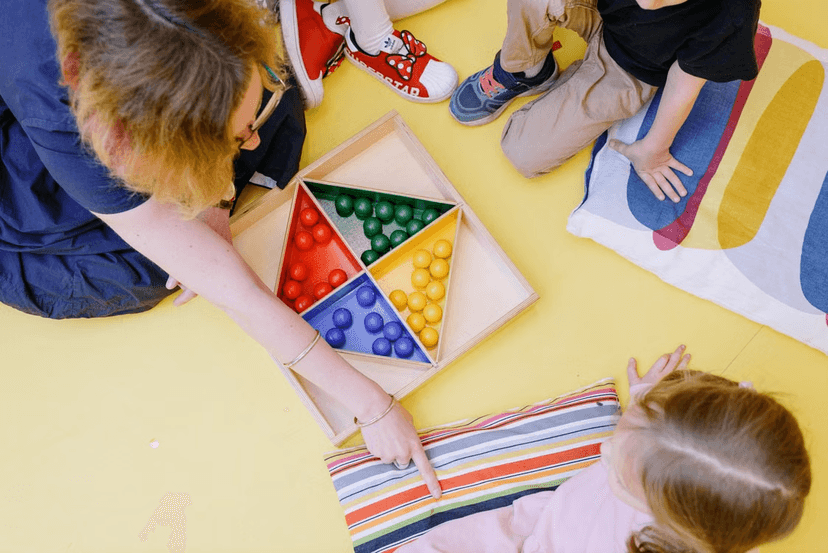
The schedule is set in hours. A child from five years old must be in kindergarten at least four hours daily on working days. During adaptation, the minimum drops to one hour per day.
This duty lies with parents and has a cost. If the child is not enrolled for the mandatory year or misses more than five days per month without a valid reason, the community imposes a fine from 30 to 350 €, which can be repeated each time. This is stated in § 72 of the school administration law (zákon č. 321/2025 Z. z.), effective from January 1, 2026.
If after six years the child is not ready for school, kindergarten can extend the mandatory year — with written consent from a pediatrician, counseling institution, and parents. If still not ready, the child will go to first grade no later than September 1 after their seventh birthday.
This rule quietly decides the queue: children for whom pre-primary education is mandatory are accepted first by the director. Three-year-olds compete for remaining places; five-year-olds do not.
For Ukrainian families, this is no longer theory. From September 1, 2025, education for children with temporary protection status in Slovakia is mandatory, and kindergarten for a five-year-old is as much part of this duty as school for a seven-year-old.
When to submit an application and what will change in 2027?
For the 2026/2027 school year, applications were accepted from May 1 to May 31, 2026. Directors had to decide by July 8, and children joined groups on September 1.
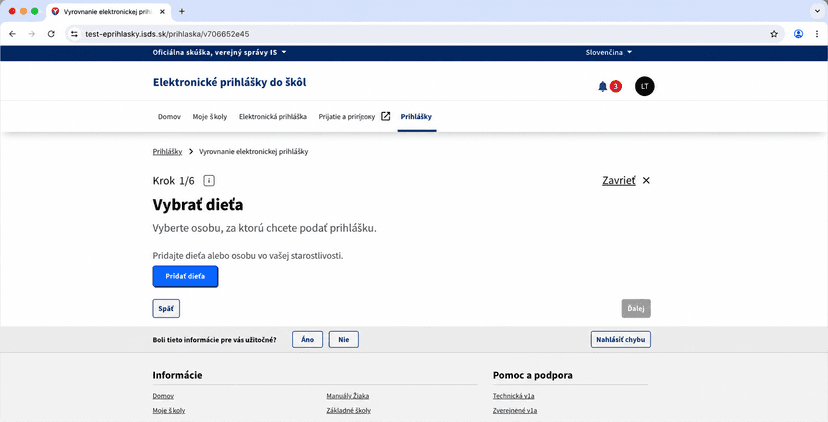
Submission moved to the state portal ePrihlášky. There are 3,344 kindergartens registered there, and over one hundred thousand applications have been submitted — for kindergartens, primary, and secondary schools combined.
From the 2027/2028 school year, the window opens one month earlier: from April 1 to May 31. The April date is already in the current version of § 59 of the school law, but a transitional provision excluded exactly one intake — for 2026/2027 the deadlines were under rules valid until December 31, 2025. So May 2026 was the last May window. The first April window is in spring 2027, for the 2027/2028 school year.
The result is not announced by letter. The list of accepted children is published on the kindergarten’s website under a numeric code given at submission, and the publication day counts as the day of delivery of the admission decision. Those refused receive a written decision within five working days of its issuance. The date by which directors must decide is announced annually by the ministry on its website.
What documents should a Ukrainian family prepare?
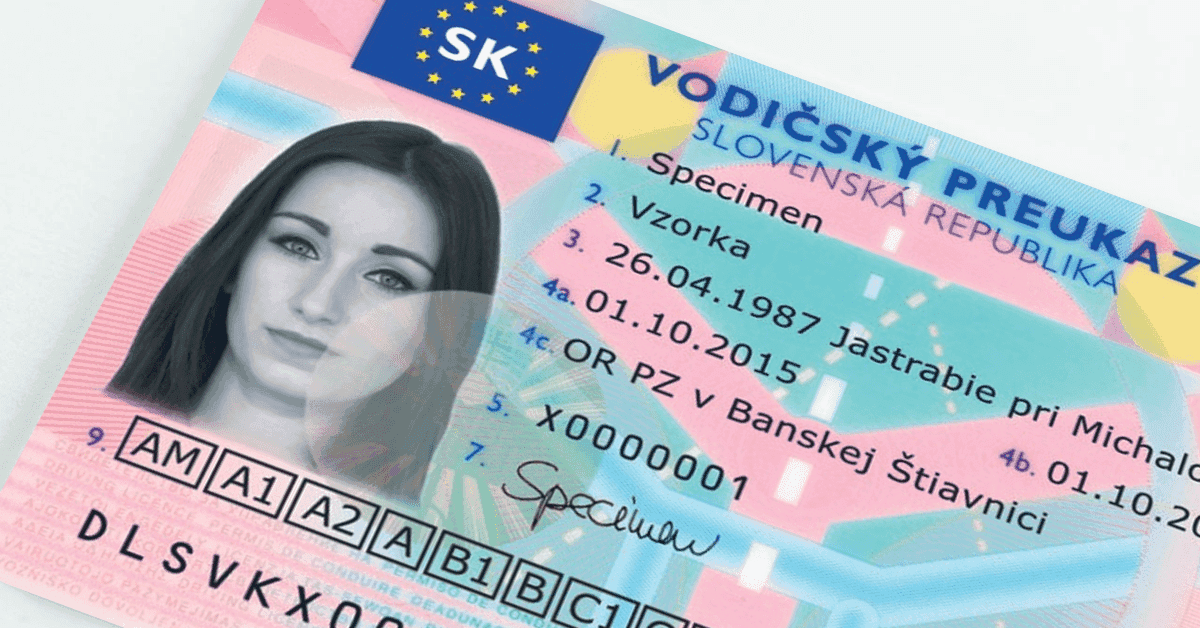
Obtain status — temporary protection, asylum, or at least confirmation that the procedure has started. Without this document, the application will not be accepted.
Find a kindergarten in your school district. The district is determined by your residence address, and local children have priority.
Get a health certificate from a pediatrician. It includes data on mandatory vaccinations — this is a legal requirement for the certificate itself.
Fill out the application form. The ministry approved a single template, and for Ukrainian families, there is a bilingual Slovak-Ukrainian version.
Both parents must sign the application. One signature is enough only if the parents agreed and submitted a written statement to the director about this.
Submit documents — in person, by mail, courier, scanned copy by email, or via the kindergarten’s eSchránka.
Besides the application and pediatrician’s certificate, the director may request a passport, child’s birth certificate, latest report card, and rental agreement.
The law sets priority for the mandatory year by groups: first children with permanent residence (trvalý pobyt) in the school district, then children placed in the district by court decision, and third are children with usual residence (obvyklý pobyt) in the district. Families with temporary protection do not have permanent residence, so they fall into the third group — but still ahead of all who live outside the district.
One more requirement that someone forgets every year. Before the first visit to kindergarten and after every absence longer than five days, parents submit a written statement: the child shows no signs of infectious disease and is not under quarantine. The statement cannot be older than one day.
How much does kindergarten cost per month?
For the mandatory year in a state kindergarten, there is no contribution at all. The discount applies only in state institutions — it does not apply to private or church kindergartens.
For younger children, parents pay. The amount is set by the community by its VZN, the same for all children in the kindergarten. In Bratislava-Ružinov, it is 75 € per month; for the second child, the contribution is reduced by 30% — to 52.50 €, for the third and subsequent by 60% — to 30 €. Families in financial hardship who submit a written statement with confirmation to the director, and children placed in kindergarten by court decision, are exempt.
A special case — kindergartens founded by local state administration bodies. The law sets a ceiling: 7.5% of the subsistence minimum for a minor child. From July 1, 2026, this minimum is 134.80 €, so the ceiling is 10.11 € per month.
Meals are charged by days. In the same Ružinov, a child aged 2–6 pays 0.55 € for a morning snack, 1.30 € for lunch, and 0.45 € for an afternoon snack — together 2.30 € per day. Above this, the same VZN charges a flat contribution for canteen overhead: 17 € per month per child, regardless of how many meals they eat.
Part of this amount is refunded by meal subsidy: the state gives 1.40 € per day when the child was in kindergarten and took a meal. It is received by children in the mandatory year; younger children get the subsidy only if the family is in financial hardship or has income at the subsistence minimum level. And it must be requested — in writing, every year before the school year starts. If not requested — it is not assigned.
Let’s sum up for one family in Ružinov. Child in mandatory year: 0 € contribution, meals 2.30 − 1.40 = 0.90 € per day, about 18 € for a twenty-day month, plus 17 € overhead — about 35 € total. Their four-year-old sister in the same kindergarten: 75 € contribution, 46 € for meals, and the same 17 € — about 138 € per month.
Private kindergartens have their own price lists, and those prices are public. In Bratislava, announced prices for 2026 start approximately from 330–390 € per month for education alone, without meals and without a one-time admission fee (some institutions charge 150 €). Relocation agencies mention a wider range: from 450 € for Slovak-language kindergarten and from 900 € for international with English. These are market estimates, not tariffs: check the exact amount in the institution’s contract.
What to do if the child is not accepted to kindergarten?
Refusal comes in writing: the decision of non-acceptance is sent by the kindergarten within five working days of its issuance.
The child has the right to a place in kindergarten from the school year following the year they turned three. If there are no places — the kindergarten must state this directly in the refusal decision. Then the duty passes to the community: it does everything necessary to have the child accepted by any other kindergarten it manages.
If the community has no more kindergartens, the deadline starts. By July 10, the community informs parents of the name of a kindergarten with free places — the closest to the residence or most convenient by public transport. Applications there are accepted until July 20. Such kindergarten must accept the child — it cannot refuse.
The law allows accepting children even during the school year when a place becomes free. Applications in February are not prohibited — but the main intake rules do not apply: no common decision deadline, no list publication.
How will the child manage without Slovak?
Foreigners receive education, accommodation, and meals on the same terms as Slovak children. The same § 146 promises them state language courses.
In the admission decision, the kindergarten may assign an adaptation stay — no longer than three months. It works as a soft entry: the child first stays for one or two hours until they get used to the group.
Ukrainian private kindergartens exist in Bratislava. For families unsure about staying long, this is a working option, but zero contribution for the mandatory year and meal subsidy work only in state institutions. Parents learning the language alongside the child will find useful a separate guide, how to quickly learn Slovak.
What payments are related to kindergarten?
Until the child is three, the family can receive príspevok na starostlivosť o dieťa — child care allowance. The condition is one: the parent submitting the application works or studies full-time. For a child with a long-term unfavorable health condition, the payment continues until six years old.
The amount depends on who cares for the child.
Who cares for the child | Maximum per month |
|---|---|
Private provider for agreed payment | 280 € |
Provider with živnosť (sole-trader license) or child group | 160 € |
State or public kindergarten | 80 € |
Other natural person (e.g., grandmother) or self-employed parent | 41.10 € |
The application is submitted in writing to the úrad práce at the place of residence, and the decision is not issued on paper — the money simply starts arriving in the account. Regardless of kindergarten, the family receives prídavok na dieťa (child allowance), 60 € per month; in the month the child first sat at a first-grade desk, an additional 110 € is added once.
Open your calendar and set a reminder for April 1, 2027: from the 2027/2028 intake, the submission window opens then and closes May 31. Before that, check which kindergarten serves your address — the school district decides where you have priority.