
From January 1, 2026, the minimum contribution for mandatory health insurance for self-payers in Slovakia will increase to 121.92 euros per month. This applies to many foreigners, including Ukrainians with prechodný pobyt (temporary residence permit) who are not employed. Understanding the Slovak health insurance system is quite possible and very important, as it affects not only access to doctors but also the legality of your stay in the country. We explain who, how much, and for what must pay, and how to avoid legal problems.
Who is required to have what insurance in Slovakia?
In Slovakia, health insurance is mandatory for everyone who permanently or temporarily resides on its territory. The system is divided into two main types: public and commercial. Your status as a foreigner directly determines which type of insurance you need and who will pay for it.
In general, the logic is simple: if you officially work or run a business in Slovakia, you become a participant in the public insurance system. In other cases, for example, family reunification without the right to work, you will have to buy a commercial policy.
Public insurance (verejné zdravotné poistenie) — this is the main system in which citizens and residents of the country who work participate. Contributions for them are paid by the employer, the state (for children, pensioners), or themselves (as živnosť (sole-trader licence — self-employment) or self-payers). It provides access to a full range of medical services.
Commercial insurance (komerčné poistenie) — this is a policy bought by foreigners who do not have the right to public insurance. Usually, it covers only emergency care and necessary treatment, but conditions may vary depending on the package.
Holders of prechodný pobyt (temporary residence permit) If you received a permit for temporary residence based on work or entrepreneurship, you are required to register in the public insurance system. If your prechodný pobyt (temporary residence permit) was issued on another basis (e.g., family reunification) and you do not work, you need to purchase commercial insurance. This is one of the key conditions for legal stay, so it is important to have all main documents for foreigners in Slovakia in order.
Ukrainians with dočasné útočisko (temporary protection) According to information from the IOM Migration Center, persons with temporary protection status have the right to free emergency medical care covered by the state. If you get employed, the employer is obliged to register you with the public insurance company. From that moment, you gain the right to full medical care on par with Slovak citizens.
Students Students from non-EU countries are usually required to have commercial health insurance. Some international agreements may provide other conditions, but in most cases, public insurance is not available to them if they are not employed.

How much does health insurance cost in 2026?
The cost of health insurance depends on who is the payer of contributions. For employed persons, the employer takes most of the responsibility, while self-payers need to transfer a fixed amount monthly.
Here are the main rates for 2026:
Self-payers (samoplatiteľ): The minimum monthly contribution is 121.92 euros. According to the portal Najpoistenie.sk, this amount is calculated from a base equal to 50% of the average salary for 2024 (1524 euros). At a rate of 16% from the base of 762 euros, the contribution is 121.92 euros. The new contribution for January 2026 must be paid no later than February 8, 2026.
Self-payers with disability: For persons with disability, the rate is half — 60.96 euros per month.
Employed: Contributions are paid by the employer. The employer withholds part of the amount (5%) from the employee's gross salary and pays their part (11%). In total, 16% of the salary goes to the insurance company.
SZČO (živnosť (sole-trader licence — self-employment)): Entrepreneurs pay contributions themselves. The minimum amount is calculated from the established base and will also increase in 2026. More details about all financial obligations can be read in our guide about Živnosť for Ukrainians in Slovakia.
Cost of commercial insurance Prices for commercial policies vary significantly. For example, the insurance company Union offers basic packages covering emergency care. Such a policy is mandatory for applying for some types of prechodný pobyt (temporary residence permit).
How to get public insurance: step-by-step instructions
The registration process in the public health insurance system is quite simple but requires meeting deadlines. A foreigner who has received a residence permit and has the right to it must arrange insurance within 3 working days.
Here are the main steps:
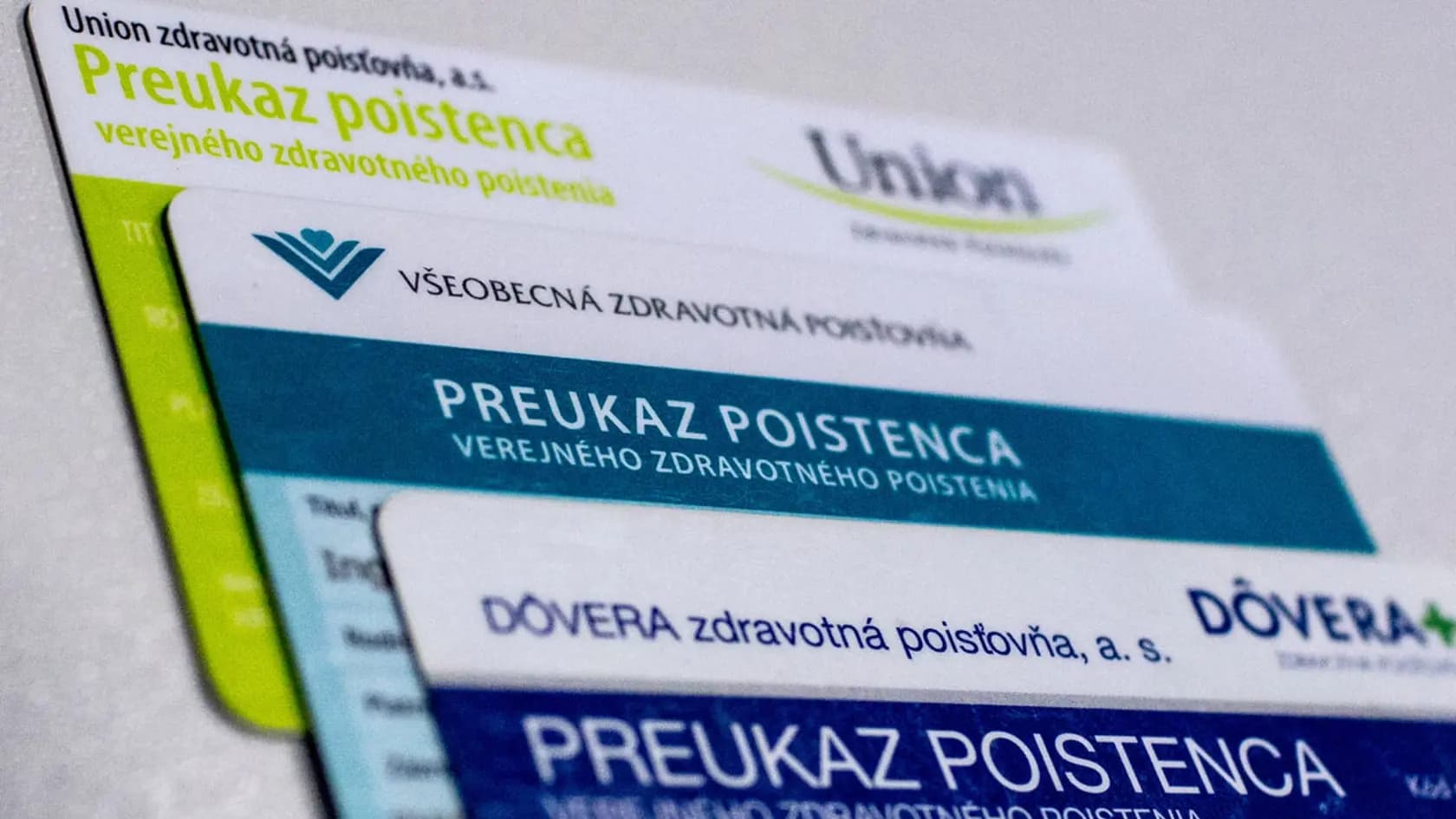
Choose an insurance company. In Slovakia, three companies provide public health insurance services: Všeobecná zdravotná poisťovňa (VšZP), Dôvera, and Union. You can choose any of them.
Prepare documents. You will need a standard package of documents. Depending on your status, the list may vary slightly:
Registration application (prihláška).
Residence permit document (prechodný pobyt card).
Employment contract (for employed persons).
Temporary protection status document (for employed Ukrainians).
For newborn children who have permanent residence in Slovakia, additional docu….
Submit documents. Go to the nearest branch of the chosen insurance company. The employee will accept your application and register you in the system. If your employer registers you, they will do it for you.
Get the insured person's card. After registration, you will receive temporary confirmation, and the plastic insured person's card (preukaz poistenca) will be sent by mail within a few weeks. You must always have it with you during doctor visits.
Remember that besides insurance, for some types of prechodný pobyt (temporary residence permit), you need to complete other procedures. We wrote about one of them in the article about medical examination for foreigners in Slovakia.
Which insurance company to choose: VšZP, Dôvera, or Union?
The choice between the three insurance companies — VšZP, Dôvera, and Union — mainly depends on your personal needs and place of residence. All provide the same basic package of services guaranteed by law but differ in the network of contracted doctors and additional benefits (benefity).
VšZP (Všeobecná zdravotná poisťovňa) — the state and largest insurance company in the country. It has the widest network of doctors and medical facilities, which is an advantage in smaller towns and villages.
Dôvera — the largest private insurance company, known for its innovations, convenient mobile app, and various loyalty programs.
Union — a private insurer offering both public and commercial insurance for foreigners. Often chosen for interesting benefits and flexible approach.
The main criterion for choice is to check which insurance company your general practitioner or specialists you plan to visit have contracts with. This can be done on the companies' websites or directly at the doctor's reception.
Service / Benefit | VšZP (Všeobecná zdravotná poisťovňa) | Dôvera zdravotná poisťovňa | Union zdravotná poisťovňa |
|---|---|---|---|
Contribution for dentist | VšZP from 1.5.2026 offers adults 2x40€ for dental hygiene, children 2x40€ for hygiene, 2x30… | Dôvera offers adults 2x30€ for dental hygiene, children 5x30€ for hygiene, fillings,… | Union from 1.1.2026 offers adults 2x30€ for dental hygiene, children 5x30€ for hygiene, doctor… |
Compensation for glasses | VšZP offers up to 100€ for glasses: children once a year for frame/lenses (diopters >+4/-4), adults… | Dôvera from 1.1.2025 offers children under 18 years 100€ for prescription glasses once a year. Adults get… | n/a |
Mobile app | Yes, with access to Recept (prescriptions) and examinations | Yes, with doctor ratings and bonuses | Yes, with online card and history |
You can change your insurance company once a year. To do this, you must submit an application by September 30, and from January 1 of the next year, you will be insured with the new company.
What does basic public insurance cover, and what will you have to pay for?
Public health insurance in Slovakia covers a wide range of services but not everything. It is important to understand the difference between emergency care, which even some uninsured people have the right to, and full medical care.
Neodkladná starostlivosť (emergency care) — this is help for sudden illness or injury that threatens life. It includes ambulance calls, help with heart attacks, serious injuries, acute pain.
Plná zdravotná starostlivosť (full medical care) — this is the entire range of services available to insured persons.
What is included in the basic package:
Emergency medical care.
Visits to general practitioners (všeobecný lekár) and specialists by referral.
Inpatient hospital treatment.
Childbirth and newborn care.
Preventive check-ups according to the established schedule.
Mandatory vaccination of children.
What you will have to pay extra for:
Prescription medicines: Most medicines are partially covered. At the pharmacy, you pay a fixed co-payment.
Dentistry: Basic procedures (examination, filling) are partially covered. For more complex interventions, such as prosthetics or implants, you will have to pay a significant part of the cost.
Medical aids: Some aids (crutches, orthopedic shoes) are partially covered.
What is not covered at all:
Aesthetic and cosmetic surgery.
Alternative medicine.
Some types of non-traditional treatment.
What happens if you do not have insurance or do not pay contributions?
Lack of health insurance or non-payment of contributions in Slovakia can lead to serious financial and legal consequences, especially for foreigners.
Risk for prechodný pobyt (temporary residence permit): Having valid health insurance is a requirement for renewing many types of residence permits. [CHECK] Its absence may be a reason for refusal.
Accumulation of debt (dlh): If you are obliged to pay contributions but do not, you accumulate debt to the insurance company. This debt must be paid along with penalties.
Fines: For failure to fulfill insurance-related duties (e.g., late notification of change of job, address, or payer status), the Health Care Supervision Authority (ÚDZS) can impose a fine. According to the legal portal Lewik.org, its amount can reach 331 euros.
Paying for services out of pocket: Without insurance, you will have to pay the full cost of medical services yourself, except for emergency care, which for certain categories of foreigners (e.g., with temporary protection) is covered by the state. A bill for a few days in hospital or a simple operation can easily reach thousands of euros.
Ignoring financial obligations can cause problems in other areas as well. For example, unpaid fines can affect your credit history or cause other sanctions similar to those for traffic violations. By the way, you can read our material about fines for traffic violations to be informed on this topic too.
Remember that having health insurance is not only a legal requirement but also your financial security. Check your insurance status online on your company's website at least once every six months to detect possible debt in time and avoid problems when renewing your residence permit.