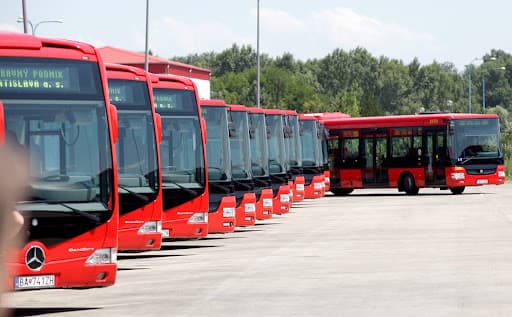

It seems like a simple situation: there are “No stopping” signs on the streets, cars are parked nearby all day, and the police just drive by. Residents of the city district Košická Nová Ves in Košice complain that the rules are applied selectively: some get fined even for a short stop, others park without punishment. But the more you look into it, the less it looks like a story about lazy police. It is more like a closed circle where no one really takes responsibility for the situation.
What happened
Most complaints are about Mliečna and Sv. Ladislava streets, where prohibition signs were installed. According to locals, almost nothing changed after the signs appeared: cars park where it is forbidden, on sidewalks, and even in the opposite direction. They also mention Poľná near the school, where parked cars make it hard to pass, and Vínová, where cars stand near a pedestrian crossing.
The regional police department in Košice rejects accusations of “favoritism.” Spokeswoman Jana Illésová assures that checks in Košická Nová Ves (city district) are conducted constantly — both on citizens’ requests and on patrols’ own initiative, and the law is applied equally to everyone, including police officers and their relatives. But the police cannot give the exact number of fines in this district: they do not keep separate statistics by streets.
Why the district “can’t do anything”
The mayor of Košická Nová Ves (city district) Michal Krcho says that the city district does not have official complaints on the scale locals talk about. But even if it did — its powers are limited:
- Mliečna and Sv. Ladislava streets are not managed by the district, so it is not authorized to install or remove signs;
- Herlianska is part of the first-class road I/19, which is managed by the state Slovenská správa ciest (Slovak Road Administration);
- the district has no competence to control violations or issue fines — that is the police’s job.
A past “petition” adds a twist: 42 residents collected signatures, but not to increase control. On the contrary, they demanded to remove the “No stopping” sign on Mliečna because it prevented them from parking. As an alternative, they proposed making the street one-way. The petition did not meet formal requirements, so it had no effect.
Parking is difficult everywhere in Košice
The problem is not only in this district. In the Ťahanovce, Terasa, and Furča neighborhoods drivers complain about lack of spaces: sometimes one family keeps two or three cars they hardly use, while someone returning from a 12-hour shift circles the street looking for a spot. The most critical streets are Berlínska, Považská, Ondavská, Idanská; near Steel Aréna on match and concert days, guests take locals’ places.
Moreover, since October 1, 2023, a ban on parking on sidewalks applies throughout Slovakia: parking on the sidewalk is allowed only where a traffic sign permits it, and at least 3 meters must remain free for pedestrians. For drivers used to “half on the sidewalk,” this means a fine.
What to do if this is your street
If cars systematically block the sidewalk or park under a prohibition sign, write a complaint to the police (you can include photos and the time), because such reports, according to Illésová, trigger inspections. Complaints to the city district make sense only regarding traffic organization — and only on streets actually managed by it. And if neighbors “reserve” spots with old immobile cars, that is a matter of technical condition and vehicle registration, which the police also handle.
One question remains unanswered in this story: who will ultimately be responsible for Mliečna if not the district and not always the police.