
If you live with the status dočasné útočisko (temporary shelter), watch how people who influence the country's migration policy talk about you. The Minister of the Interior, Matúš Šutaj Eštok, commented on the beating of a Ukrainian couple in Wrocław — and instead of condemning the attackers, he spoke about “economic migrants” from Ukraine.
What happened in Wrocław
On July 26, a group of Polish men attacked a Ukrainian couple, probably because of their accent. The police quickly found the suspects: two men were arrested for three months — 45-year-old Adam S. and 27-year-old Tomáš M. They were charged with assault and using violence based on national origin.
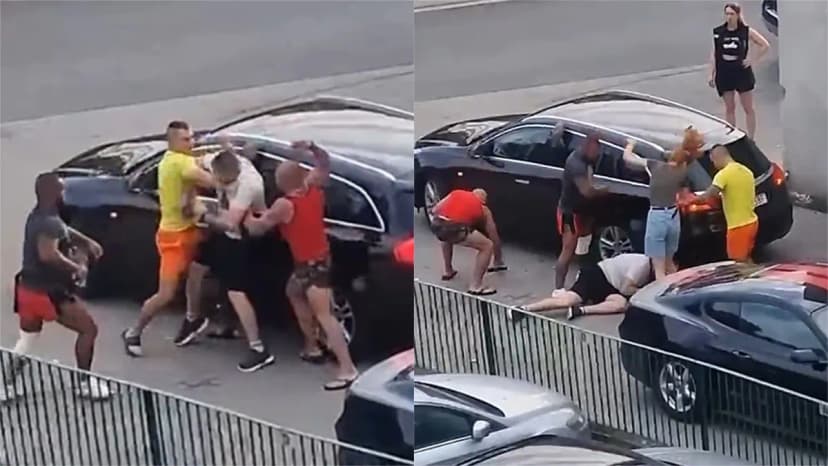
The details about the suspects are telling. Adam S., nicknamed “Cicu,” is a fighter in the bare-knuckle fighting federation Gromda with a criminal past: in 2024, he was released from prison after ten years of imprisonment. And since he acted under recidivism conditions, he faces up to 7.5 years behind bars.
What the minister said
At the end of July 2026, Šutaj Eštok published a video reaction to the incident. There was no condemnation of the attack in it. Instead, the minister said that “almost a million Ukrainian refugees are no longer welcome” in Poland and linked this to “rising anger” due to the worsening economic and social situation of the Poles themselves.
Then he drew a political thesis from the attack: what happened should allegedly be a signal for politicians that “their own citizens must come first.” He called Poland an example of failure in organizing aid to Ukraine. And then, without any evidence, he spoke about a large number of “economic migrants” from Ukraine — especially men who, in his opinion, should stay home and defend their country.
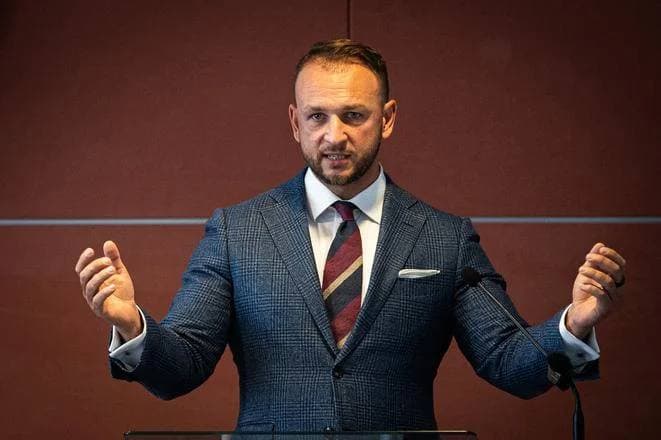
The statement came amid his broader claims about “war fatigue,” which is “felt almost all over Europe,” and that politicians who prioritize foreign interests are failing.
How Poland reacted
In Poland itself, the incident caused a resonance at the highest level. Prime Minister Donald Tusk called on the country’s president to respond to the attack, and the government spokesman linked the rise in violence to the rhetoric of right-wing politicians.
Separately — the Gromda federation, in which one of the attackers fought. The Warsaw District Prosecutor’s Office launched its own investigation: they are checking the federation’s social media materials, which have a “radically xenophobic and racist character” and are directed against Ukrainians and other migrants.
Why this is important for Ukrainians in Slovakia
The Ministry of the Interior in Slovakia is responsible for the police and migration sphere — that is, for the institutions Ukrainians here deal with directly, from document renewals to everyday security. The words of its head show how official Bratislava views Ukrainians in the region.
The difference from the Polish context was also noted in the Slovak public space: SME commentators reminded that Ukrainians work, pay taxes, and often contribute to the Slovak economy rather than being a burden. This is worth remembering every time a top politician talks about “unwanted refugees.”