
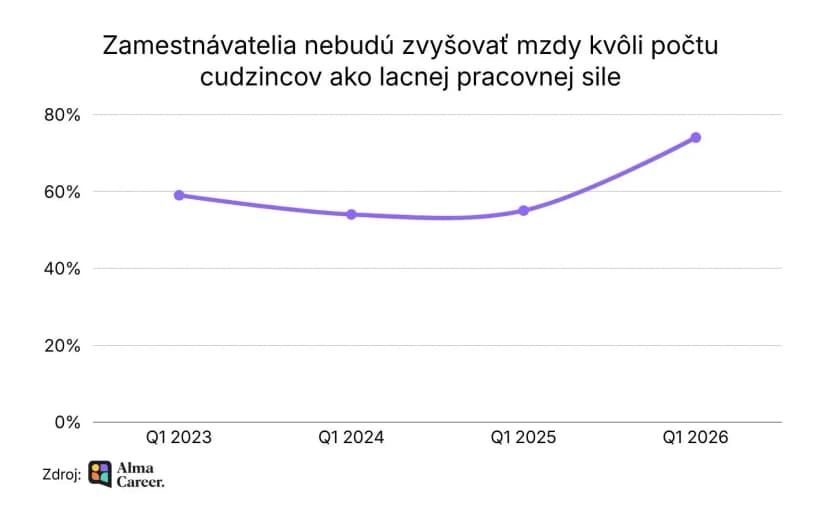
Back in spring 2023, 59% of respondents thought so — over three years the share increased by 15 percentage points. These are the latest data from the JobsIndex study, which was published by Alma Career Slovakia in August 2026, and they directly concern Ukrainians — one of the largest groups of foreign workers in the country.
What exactly Slovaks fear
The main fear is money. Almost three quarters (74%) of Slovak workers believe that employers will not raise wages because they have access to cheaper labor among refugees and foreigners. In neighboring Czechia, 62% think so — also many, but noticeably fewer.
The second fear is job loss. Almost two thirds of Slovaks (about 66%) see a direct threat in foreign competitors, while in Czechia less than half do. Moreover, Slovaks are more critical than Czechs about government spending on the integration of foreigners: they believe this lowers the quality and availability of public services for locals.
At the same time, economic skepticism does not cancel out humanity. The willingness to help a refugee in a personal situation is the same in both countries — 43% of workers in Slovakia and Czechia express it. So a person can consider foreigners a threat to their salary but at the same time help a specific neighbor-Ukrainian — social psychology works this way.
Slovaks do not believe in the benefits of migration
Only 41% of Slovak workers agree that foreigners fill staff shortages and help the economy. In Czechia, this figure is 55%, reports SITA.
Alma Career analysts explain this with a simple mechanism: negative attitudes toward economic migration grow along with fear about the state of the economy. The more a person fears for their own well-being, the greater threat they see in workers from abroad. The problem here is more about the economic insecurity of Slovaks themselves, not foreigners as such.
Employers are cautious, but the need for foreigners exists
A parallel survey “Dátový sprievodca adaptabilitou firiem” showed that companies are also cautious, but for different reasons:
Half of Slovak firms say they do not need foreign workers at all.
Only 19% of companies say they cannot do without foreigners.
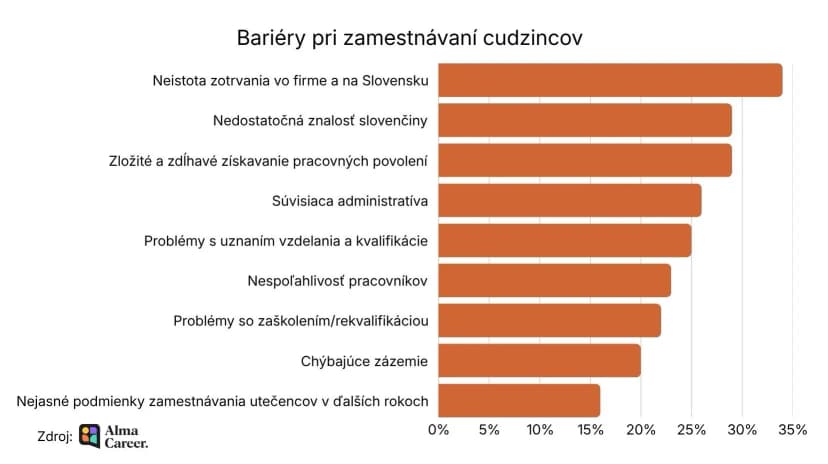
The main barriers to hiring are uncertainty that the worker will stay in the country for a long time and the complicated administrative procedure for work permits.
The last point is a practical tip for Ukrainians. The employer fears not your competition, but that you will leave for further west in half a year, and the efforts invested in paperwork will be wasted. If you clearly signal at the interview that you plan to stay in Slovakia, this removes barrier #1.
What this means for Ukrainians in practice
First, do not read this statistic as personal hostility. Researchers directly state: despite fears, Slovak workers have no real reason to fear job loss due to migration — the labor market in the country still feels a shortage of staff in several sectors, writes SME.
Second, be ready that in the team the topic “foreigners push down wages” may come up — this is now the dominant opinion among three quarters of Slovak colleagues. Your arguments are simple: you work under the same tariff grid, pay the same taxes, and your employer must follow equal conditions.
Third, keep the trend on your radar. If fears grow at the same rate as in the last three years, sooner or later this will be reflected in political decisions — from hiring rules to residence conditions. So far, no legislative changes against foreign workers have been announced, but the social demand recorded by such surveys usually precedes policy, not follows it.