
In Slovak school classes, the new 2026/2027 school year will start with an innovation: the basics of artificial intelligence (AI) will become an official part of education. Changes to the State Educational Program for primary and basic education came into force in March 2026, and schools will begin to implement AI literacy in practice starting in September.
What exactly will be taught
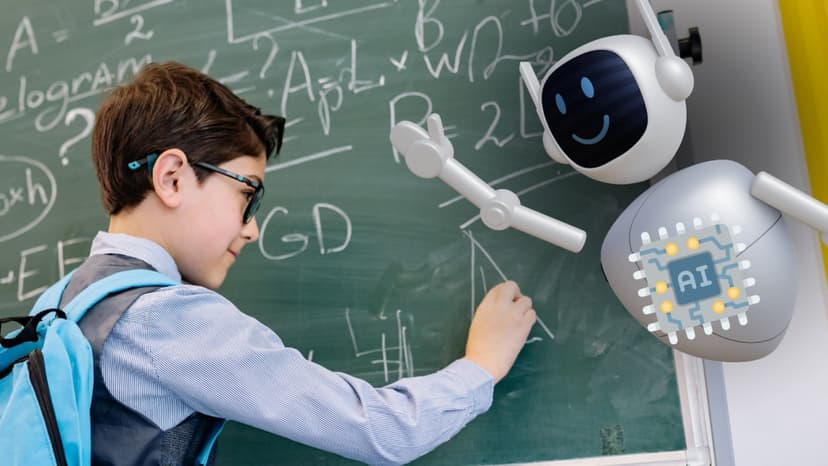
There will be no separate subject called “artificial intelligence.” Instead, AI will be a cross-cutting theme integrated into various subjects—from Slovak language and social studies to natural sciences and art.

The Ministry of Education, Research, Development and Youth of the Slovak Republic has a broader goal than just “teaching how to use a chatbot.” Students should learn to:
understand how artificial intelligence (AI) is structured and the principles on which it operates;
critically evaluate the results AI produces, rather than accepting them as absolute truth;
know about the limitations and risks of technologies, including hidden threats;
use AI safely and responsibly.
All this is part of the Plan for the Responsible Use of Artificial Intelligence in Education for 2025–2027. It is based on four principles: accessibility, equality, quality, and safety.
Money, vouchers, and agreement with Google
Schools will not be left alone with the new program. As part of a national project worth nearly 3.7 million euros, they are promised methodological and financial support. One of the tools is a system of so-called AI vouchers. This system is meant to make it easier for schools to access licensed educational AI tools, so principals do not have to search for free options on the internet by themselves.
A separate point is international cooperation. The Ministry of Education has signed memorandums with technology giants, including Google. This opens schools’ access to the Google for Education platform and tools like Gemini. As Netky.sk writes, the agreement aims to provide educational institutions with modern tools without additional costs for parents.
The main problem — teachers
The most interesting figure in this story is not about students. According to the ministry, artificial intelligence is already used by 80% of students — but only 25% of teachers. Children have long been doing homework with AI, while many educators still do not fully understand what it is.
This gap is the focus of a significant part of the project: national frameworks and recommendations for AI use in schools are planned, as well as teacher training. As Aktuality.sk notes, the project covers education from kindergartens to secondary schools and separately focuses on the risks and hidden threats of technologies.
What this means for families
Costs for AI tools will not fall on parents — access to licensed programs will be provided by the school through the voucher system.
Children will be taught to check chatbot answers rather than mindlessly copying them. This is a skill that will be useful regardless of where they continue their education.
Ukrainian-speaking children will have access to the same tools as their Slovak classmates — the principle of equality is embedded in the plan itself.
One question remains open: will teachers be trained in time for September? The ministry promises teacher training courses, but how it will actually be in a specific school, parents will see only at the first parent meetings of the new school year.