

Ukrainian refugees with temporary protection status are evolving from a temporary and low-skilled workforce into a stable, long-term, and vital component of the Slovak economy. They are increasingly moving from construction sites and manufacturing plants to office chairs, retail spaces, and the service sector.
This is evidenced by the National Bank of Slovakia’s (NBS) fall analytical report on the country’s economic and monetary developments for 2026.
Nearly 26,000 workers and more than one job
According to official data from the regulator, the number of officially employed refugees from Ukraine has increased by 3,300 over the past year. As of the end of June 2026, nearly 26,000 Ukrainians with temporary asylum status were officially employed in Slovakia.
An interesting trend has emerged: as their stay in the country has been extended, Ukrainians have begun to more actively build their own financial foundations. According to the National Bank, many of them currently have more than one official job (earning more than one average monthly salary), which indicates their deep integration into the country’s economic life.
From Low-Skilled Jobs to Offices and the Service Sector
The most noticeable changes have occurred in the structure of employment itself. While in 2022, following the start of the full-scale invasion, most Ukrainians took whatever jobs were available—primarily in manufacturing, construction, or as machine operators—the situation has changed radically over the past four years.
Growth in the service and administrative sectors: The share of Ukrainians employed in administrative, trade, and service occupations (ISCO groups 4 and 5) rose from 13% in March 2022 to over 23% by mid-2026.
Decline in the share of unskilled workers: In contrast, the percentage of those engaged in support and non-profit occupations has been steadily declining.
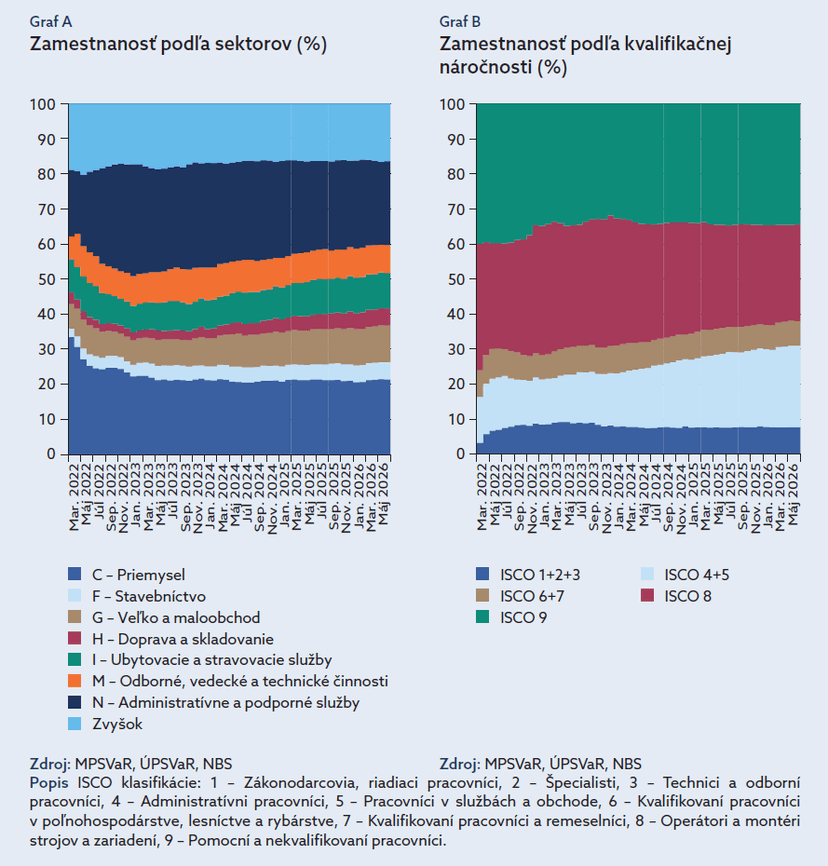
“Ukrainian refugees are integrating and transitioning to more skilled jobs. This increases the likelihood that they will remain in Slovakia for a longer period and help local companies fill labor shortages,” analysts at the National Bank of Slovakia emphasize.
Revised Forecasts: Why Are Ukrainians Staying?
The initial scenarios of the Slovak government and the NBS assumed that once the war ended, most refugees would immediately return home. However, in its new macroeconomic forecast, the regulator has significantly revised its estimates in favor of long-term labor market integration in Slovakia.
Among the main factors contributing to Ukrainians’ permanent settlement in Slovakia, NBS experts highlight:
Learning the Slovak language and expanding professional networks;
Transition to more skilled and higher-paying positions;
Integration of children into the Slovak education system (schools and kindergartens).
According to the National Bank’s updated estimates, the total number of people with temporary shelter at the end of the forecast period will be 67,000 higher than previously anticipated. And although not all of them will be economically active (there remains a high percentage of children and retirees among refugees), it is the working Ukrainians who continue to be the main lifeline for Slovak companies in their struggle with labor shortages.