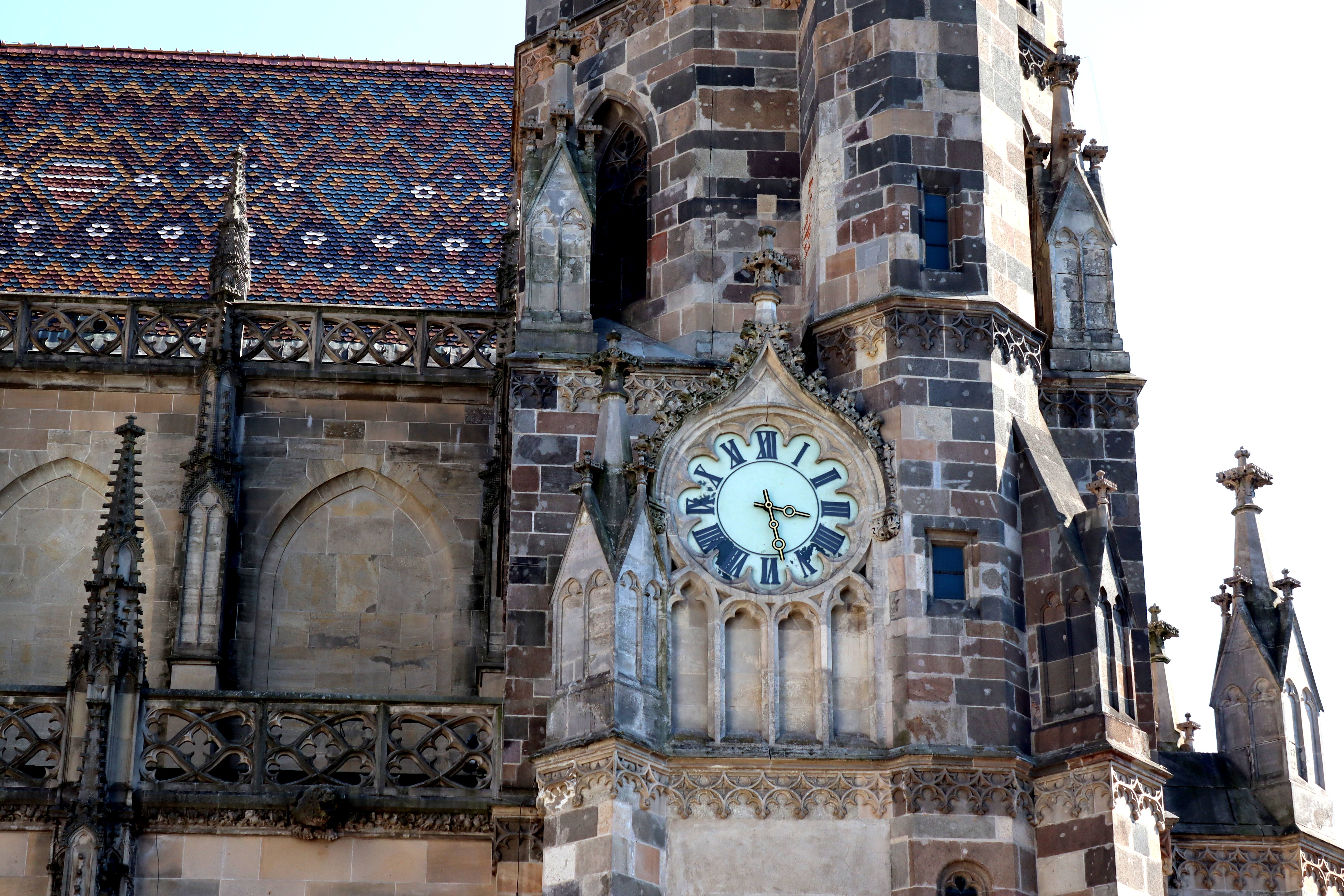

It might seem that in the era of digital gadgets, a stopped clock on the main city landmark — the dominant feature — is just an aesthetic defect. But for the historic city center and its residents, it is a real loss of the usual rhythm.
The famous clock faces on the tower of the largest temple in Slovakia — Dóm svätej Alžbety — stood still for almost ten years. Despite being the main tourist gem of the region, no one could repair the mechanism for a simpler reason than expected: there were almost no masters left in the whole country who specialized in complex architectural mechanics of this scale.
What prevented the mechanism from starting
The problem remained unsolved for a long time due to a shortage of specialized experts and the specifics of the construction. As historians and temple curators note, in past centuries the condition of the mechanisms was carefully monitored — for example, the head kostolník (temple guard) personally climbed up weekly to manually wind the system and check the parts.
When more modern constructions broke down, standard service departments shrugged their shoulders. The situation moved forward thanks to local enthusiasm. The diagnosis was taken on by a Košice umelecký kováč (artistic blacksmith).
How the malfunction was found
During a detailed inspection of the tower, it was found that the cause of the stoppage was small but critical damages. Due to the lack of regular lubrication and the influence of moisture, the main axis inside the case completely rusted and jammed the mechanism.
- Lower clocks: required disassembly, cleaning, and replacement of worn axes.
- Upper complex: four clock faces on the higher Žigmundova veža (Žigmund Tower) are controlled by a single system, where damage to one small gear stopped the entire movement.
The master manually overhauled the outdated parts, restored the smooth movement of the gears, and transferred part of the modern setting to a more stable electric drive. Thanks to this, five external clock faces again show the exact time.
What will happen next with the historic tower
Now that the main movement of the hands is restored, specialists plan the next stage — full restoration of the sound strike mechanism. In the past, special bells marked every full hour, as well as quarters and halves [1.1.10]. The return of this traditional sound accompaniment will finally restore the tower’s historic function in the life of the city.