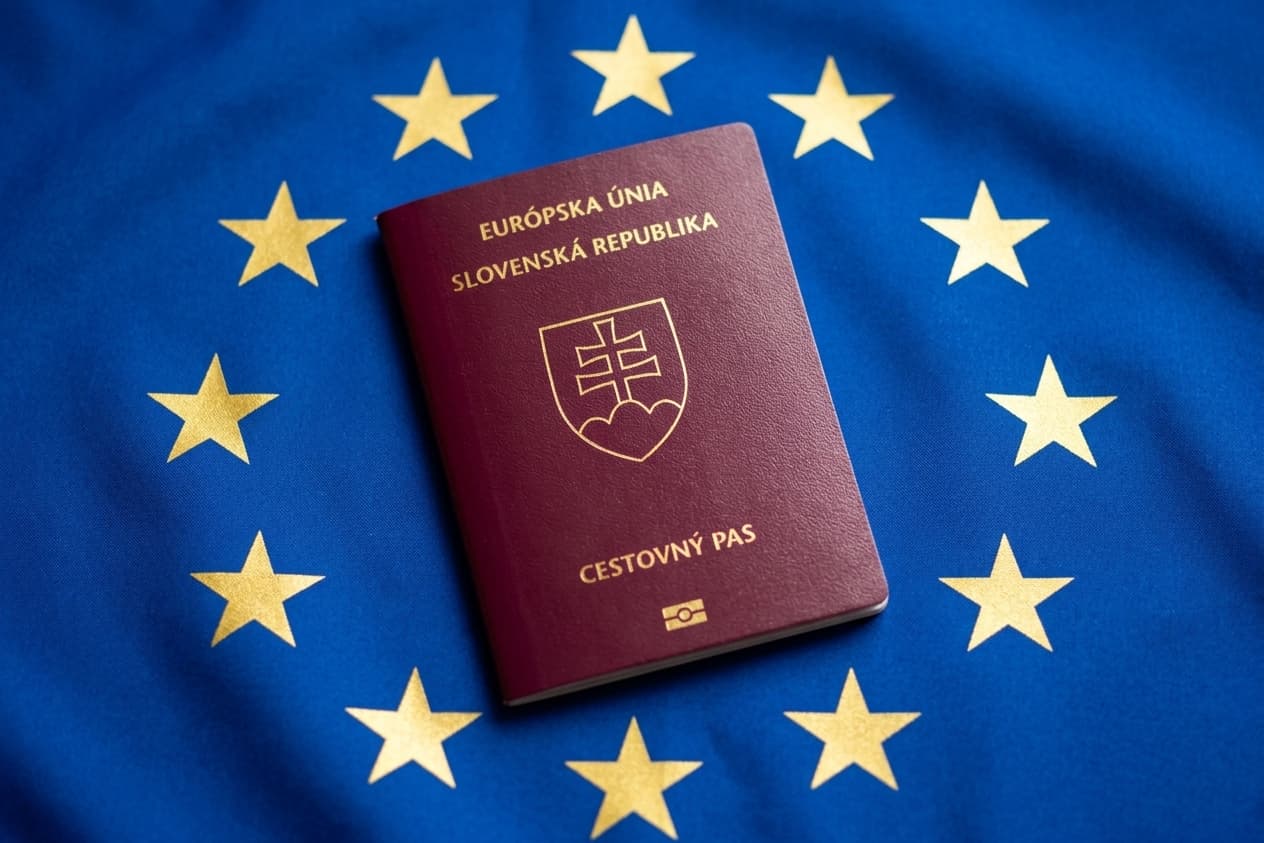

The plastic driving license in its current form is gradually becoming a thing of the past — the European Union introduces a fully digital format in a phone app. Directive (EU) 2025/2205 already came into force on November 25, 2025, and the full transition in all EU countries, including Slovakia, will be completed by the end of 2029.
The changes will affect practically everyone who has category B driving licenses, as well as beginners behind the wheel and those planning to get a license for the first time. Below is what exactly will change and when, according to the overview of changes from AutoŽivě and the European Commission's announcement.
Digital license and implementation deadlines
The main innovation is the digital driving license, available on a smartphone through the European Digital Identity Wallet (EUDI Wallet). After the transition period, the digital format will become the standard in all EU member countries. But there is no need to panic: a physical plastic card can be obtained on request, so no one plans to forcibly “move” everyone to phones.
The timeline is as follows. EU countries must transpose most of the rules into national legislation by November 26, 2028, and full application of all norms is expected from November 26, 2029. Changes will come gradually over several years.
The goal of the reform is to reduce the number of road victims: just last year, 19,940 people died on EU roads, and progress toward the “Vision Zero” goal (half the deaths by 2030) is slow.
Two-year probation period and licenses from age 17
For all beginner drivers — regardless of age — a mandatory probation period of at least two years is introduced. During this time, stricter rules and sanctions will apply, including for driving under the influence. Countries will be able to introduce zero tolerance for alcohol and drugs for beginners.
The second change concerns youth. A pan-European accompanied driving scheme will appear: 17-year-olds will be able to get category B licenses and drive accompanied by an experienced driver. Countries must implement this rule by November 26, 2028.
Special attention will also be paid to the exams themselves. Theory and practice will emphasize safety for vulnerable road users — children, pedestrians, cyclists, and electric scooter users — as well as risks of distraction while driving.
License revocation will apply throughout the EU
An important change for those who drive in several countries: a driving ban issued in one EU country for serious offenses — alcohol, drugs, significant speeding, or accidents with serious consequences — will be automatically recognized throughout the European Community.
This closes an old loophole: until now, a driver deprived of a license, for example in Slovakia, could continue driving at home or in another EU country because bans did not cross borders. Now they will.
Validity period and medical checks
A single validity period for licenses is established:
15 years for motorcycles and passenger cars (categories A and B). A country may shorten the period to 10 years if the license is used as an internal ID document;
5 years for trucks and buses;
for drivers over 65 years old, countries may shorten the validity period.
There is also freedom of choice for medical checks for states: for passenger car and motorcycle drivers, the mandatory medical check can be replaced by a self-assessment health form. For professional truck and bus drivers, the medical check remains mandatory. How Slovakia will act will be decided during the directive's implementation.
What this means for Ukrainians in Slovakia
For Ukrainians living in Slovakia and driving cars, two points are most interesting. First: the directive creates a framework for recognizing third-country licenses — if road safety standards in the non-resident country meet European ones, its licenses can be exchanged for a license valid throughout the EU. The list of such countries will be determined by the European Commission together with member states. More about how this will work is written by EP Think Tank.
Second: EU citizens living abroad will be able to take the category B driving test in their country of citizenship if the country of residence does not provide test translations in their language. This does not directly concern Ukrainians but illustrates the direction — the system is becoming more flexible for those living outside their home country.
For now, no action is needed: current Slovak licenses remain valid, and the digital format will appear gradually with the launch of the EUDI Wallet in Slovakia. But if you are planning to get a license or exchange a Ukrainian license — watch for changes, as rules will be noticeably updated by 2029. Up-to-date information about roads and traffic rules is collected in the transport section.