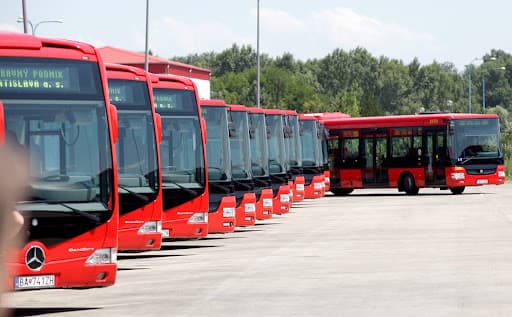

Every morning, thousands of drivers heading to the capital face the same problem: where can they safely park their cars to avoid morning traffic jams? The number of cars per family is rising, and the situation in Bratislava is getting worse. The P+R (Park and Ride) system has long lagged behind that of other European capitals. Existing parking spots on the outskirts of the city fill up first thing in the morning, and projects intended to alleviate the situation face bureaucratic and financial obstacles.
Millions in investments and uncertain timelines
The city government’s plans to build new, modern parking facilities are running up against reality. The largest project in the works—a 418-space parking garage near the Bratislava Zoo (ZOO)—will cost approximately 15 million euros, including VAT. In addition, a smaller parking lot with 126 spaces is planned directly next to the ZOO, along with other parking areas.
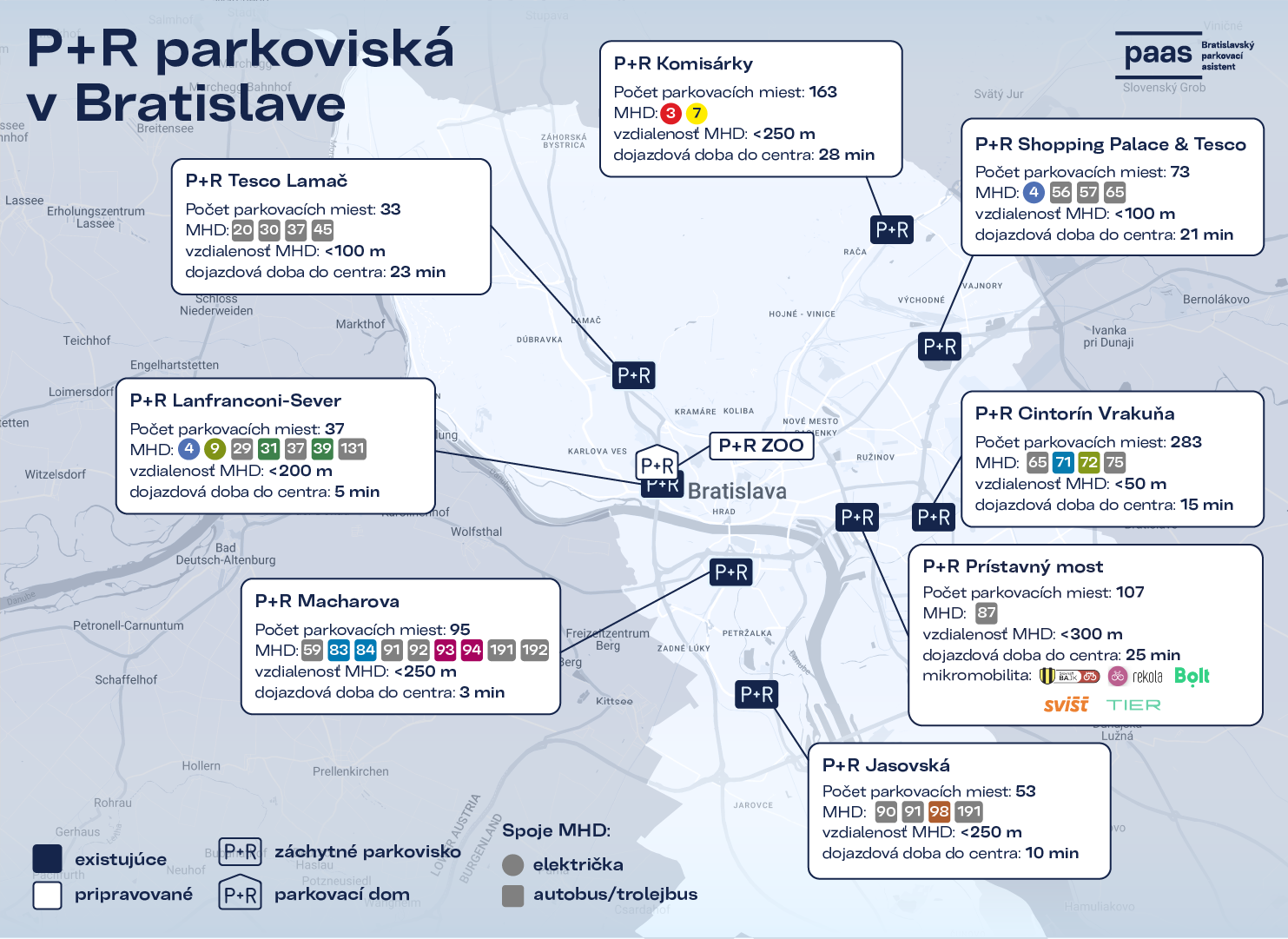
However, the project near the ZOO is facing delays. The city has submitted the construction plan to the building authority in Karlova Ves, but the exact start date for construction and the final source of funding have not yet been determined. Critics among transportation analysts point out that the location of the parking lot near the zoo intercepts drivers arriving from the west too late. In their opinion, it would be more effective to build parking lots earlier, for example, on the outskirts of Dubrauka or near eastbound highways, such as Zlaté Písky.
Why the P+R system isn’t working yet
The combination of driving to a parking lot on the outskirts and continuing the journey via rapid city public transit (MHD) works only partially. Existing park-and-ride facilities are often located far from high-speed transportation corridors, or drivers are unsure about the safety of leaving their cars for long periods.
Meanwhile, Bratislava’s PAAS parking policy itself generates millions in revenue, which goes into a special mobility fund. The city uses this money to finance the expansion of regulated zones and the construction of new parking garages. In an official report on parking development, City Hall also confirms that it is considering the possibility of charging for the use of certain park-and-ride facilities and installing barriers to ensure better turnover of parking spaces.
How Things Stand in Neighboring Capitals
When comparing Bratislava to neighboring capitals, their approach to parking facilities is much better thought out:
- Vienna: Overnight parking at park-and-ride facilities near metro stations costs approximately 4.60 euros, which encourages drivers not to drive into the city center.
- Prague: Offers a network of park-and-ride facilities directly connected to metro lines, designed primarily for commuters.
- Budapest: Large P+R terminals (for example, in the Kelenfeld district) allow drivers to leave their cars for a nominal fee and easily transfer to public transportation.
For the average driver in Bratislava, this means one thing: it’s not yet worth counting on the availability of free spaces in existing parking lots in the morning, and we’ll have to wait for major projects to be completed, according to Pravda.sk.