

If you drive on the D2 highway or through the center of Trnava and noticed new cameras there — you can stop worrying about them. At least temporarily: the Ministry of the Interior of Slovakia (Ministerstvo vnútra Slovenskej republiky) turned off both installed radars and suspended the entire program while an investigation is ongoing into where this equipment really comes from.
What happened
These were supposed to be next-generation radars: besides speed, they detect unfastened seat belts, phone conversations while driving, and other violations. In total, with European funds, they planned to install 279 stationary cameras — the contract including installation and setup was about 30 million euros. The supplier was a large Slovak IT company Soitron.
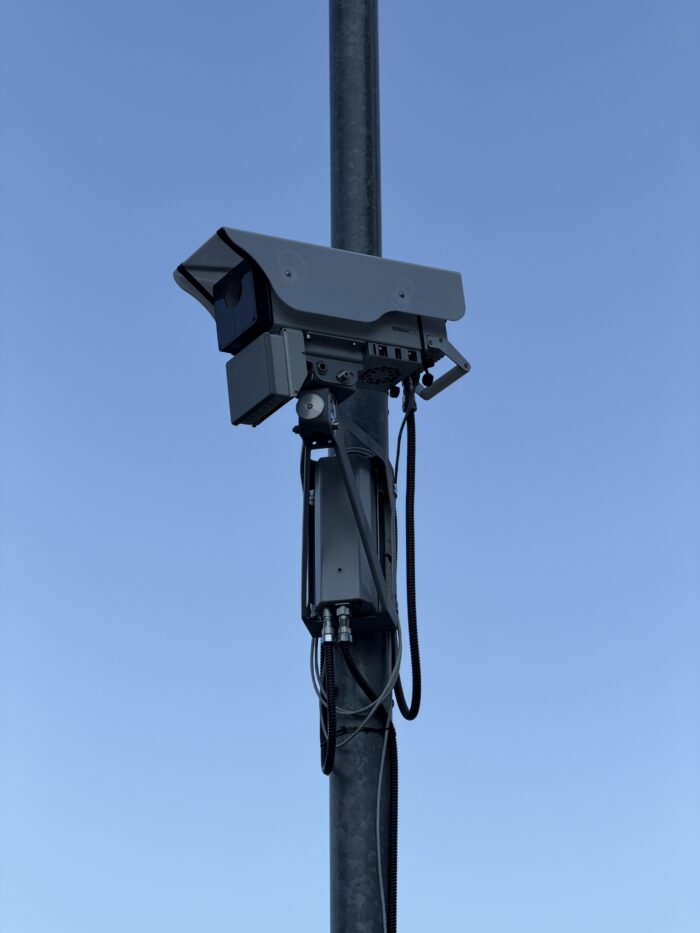
However, after the first two devices appeared, experts from the opposition party Progresívne Slovensko stated: by the shape of the case, the placement of optics, connectors, and cooling system, the cameras are 99% identical to the Russian system “Kordon” by the company Simicon from Saint Petersburg. The opposition’s conclusion is harsh: if the equipment is really Russian, then potentially Russian intelligence services could get access to data about the movement of cars of all residents of Slovakia. The criticism was joined by the party KDH, which demanded an extraordinary parliamentary investigation and explanations from the Minister of the Interior.
How the ministry reacted
At first, the Ministry of the Interior rejected all accusations, referring to Soitron’s reputation. But under pressure from journalists and the opposition, the position changed. As RTVS writes, the ministry demands detailed documentation from the supplier about the origin of all hardware and software components, and also asked the Národný bezpečnostný úrad (National Security Office, NBÚ) for an independent examination.
The NBÚ must check the hardware, software, data transmission methods, and possible technological connections of the devices. Until the check is complete:

- both installed radars are turned off;
- new cameras will not be installed;
- the ministry promised to publish the results of the examination.
Cyprus or Russia — two versions from the supplier
Soitron categorically denies Russian origin. According to Webnoviny, the company claims that the devices were supplied by the firm it-s, j.s.a., and they do not contain components from countries under EU sanctions. Some publications mention that according to the certificate, the radars supposedly come from Cyprus — so the question “Russia or Cyprus” is now central in this story.
The ministry itself assures: in working mode, data from the cameras is transmitted via a secure channel exclusively to its own systems, and neither the manufacturer nor the supplier has access to state databases. However, the agency admitted that questions about the origin of the technology are legitimate.
There is one more nuance: a large tender for 279 radars was stopped by the Public Procurement Office (Úrad pre verejné obstarávanie, ÚVO) even before the scandal. So in fact, only two test devices were purchased and installed — to check the operation of the central system. The scandal erupted around the pilot, not the deployed network.
What this means for drivers
There will be no new radars on Slovak roads in the near future, and the two existing ones are turned off. If the NBÚ examination confirms Russian origin or even does not remove doubts, the program may be significantly revised or the equipment ordered from another supplier — which will again delay the network launch by months.
On the other hand, if the origin is confirmed as European, the cameras will return — and already with the function of detecting unfastened seat belts and phone use while driving. So it is better to get used to fastening your seat belt and not holding your mobile phone in your hands now, regardless of how the investigation ends.