
Queues at the Slovak-Ukrainian border seem like an eternal lottery where no one counts anything. In fact, they do count, and quite scrupulously: at the end of June, the integrated transport system IDS Východ (IDS Eastern Slovakia) conducted a three-day survey right at the border crossings and recorded that on Saturday in the direction of Ukraine people waited from 4 to 8 hours.
What exactly was measured
From June 26 to 28, 2026, approximately 520 respondents were surveyed at the crossings. The organizers deliberately chose the peak period: usual statistics often “blur” seasonal spikes, and these are the most painful for those who regularly travel home to Ukraine.
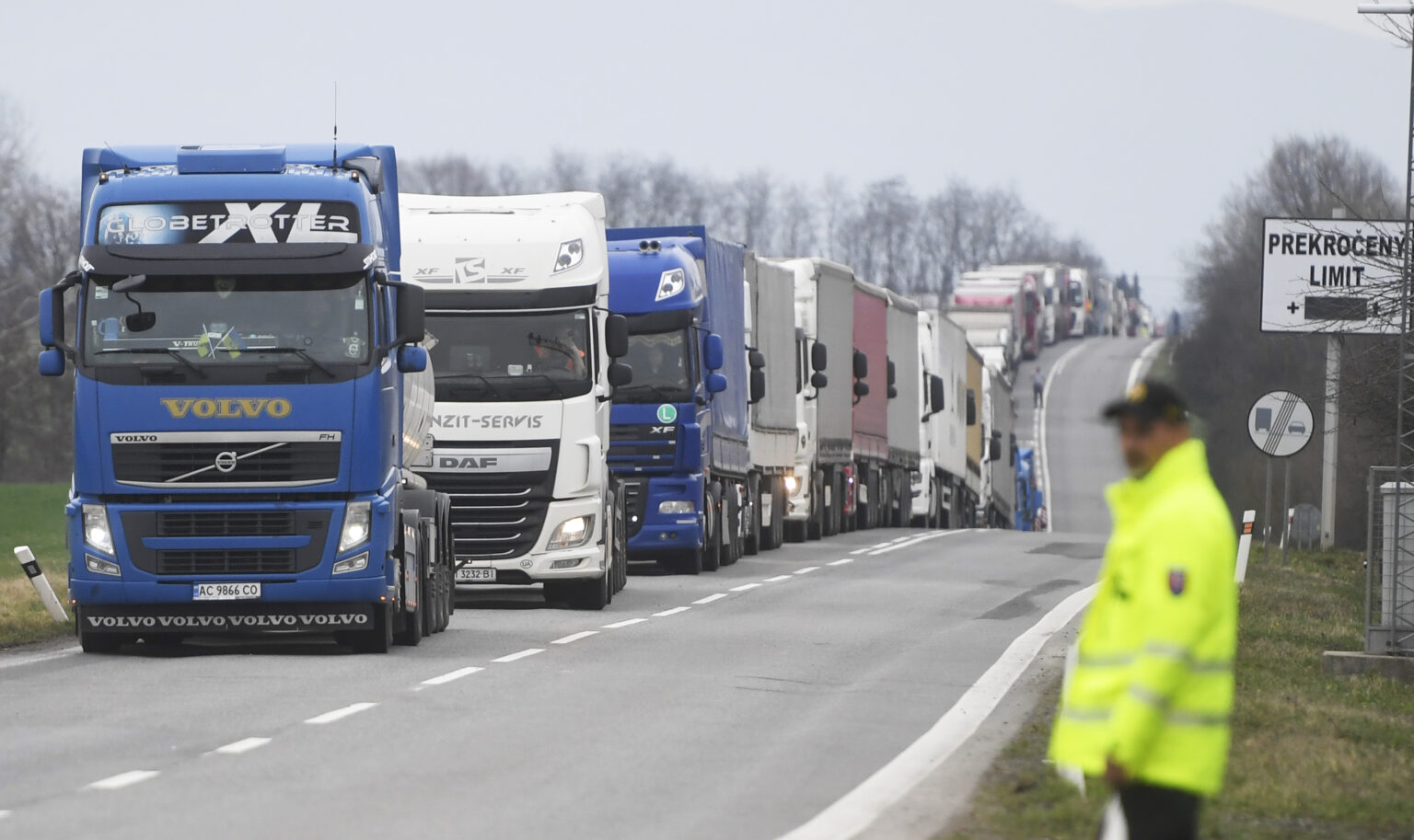
They collected not abstract numbers but specifics: where people are going, for what purpose, and by what transport they cross the border. According to the border survey, Saturday queues toward Ukraine reached 4–8 hours. The organizers interpret this as a sign of extremely intense cross-border mobility.
Why all this — and what will change for you
The survey is only part of a larger work. It was conducted within the international project OTRACON SK-UA, a joint initiative of Slovakia and Ukraine with a budget of 1,053,125 euros under the Interreg VI-A NEXT program. The project started on June 1, 2025, and will last until May 31, 2027.
Its task sounds technical, but the consequences are quite practical:
to update the transport model of eastern Slovakia and create a similar one for the Zakarpattia region — both based on shared data;
to determine the optimal number and structure of border crossings separately for freight, passenger cars, and rail transport;
to prepare project documentation for the reconstruction of the M-25 route toward Solomonovo.
On the Slovak side, the partner is IDS Východ (IDS Eastern Slovakia), and on the Ukrainian side — the Institute for the Development of the Carpathian Region and the Service for Infrastructure Restoration and Development in the Zakarpattia region. The results will form the basis for updating the Sustainable Mobility Plans of the Košice and Prešov regions, which in turn is a condition for attracting EU funds for real transport projects. Simply put: without this data, there will be no new bus routes or modernized crossings. Project details are on the Interreg program website.
Border police and the Financial Administration in Michalovce helped collect data — their representatives will also participate in presenting the results so that planning is based on the real situation at the border, not on paper models.
How not to get into an 8-hour queue
The load on the crossings is really increasing. For example, the Vyšné Nemecké – Uzhhorod crossing was crossed on foot or by bicycle by 30,000 people in the first three months of 2026 alone. And at Ubľa – Malý Berezný, after simplifying rules for humanitarian cargo up to 5 tons, traffic increased by 70%.
Before traveling to Ukraine, check the current waiting times at the crossings — the Slovak Financial Administration publishes online data for Vyšné Nemecké, Ubľa, and Veľké Slemence and regularly updates them. If you see that the queue is “red” on Saturday afternoon, it makes sense to shift your departure to the morning or a weekday.
Analysis of the collected data is still ongoing, and specific decisions — new routes, expanded crossings — should be expected closer to 2027. But at least one thing is clear: 8-hour queues have finally been counted and recorded in documents that allocate European funds.